Official Archive Record
Case File CF-0009
Teddy Roosevelt and the Bigfoot Story
Also known as: Bauman story, Bauman incident, Theodore Roosevelt Bauman story, Roosevelt's Bigfoot story
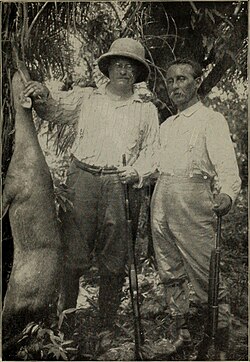
Long before Bigfoot became a modern pop culture icon, strange stories of wild men, hairy giants, and unknown creatures were already part of frontier folklore. One of the most famous early accounts was recorded by Theodore Roosevelt, who included a disturbing wilderness tale in his book The Wilderness Hunter.
What Happened
The story was told to Roosevelt by a trapper named Bauman. According to the account, Bauman and another man were trapping in a remote mountain region when they began to feel that something was watching them. Their camp was disturbed, tracks were found, and the men became increasingly uneasy.
At first, the creature seemed to be circling them from a distance. Then it allegedly came closer. The story describes a foul smell, strange behavior, and something powerful enough to unsettle two experienced outdoorsmen.
The most chilling part of the account comes when Bauman returns to camp and finds his partner dead. The body is described as having been attacked in a way that did not seem normal. Whatever happened, Bauman was terrified enough to flee the area and never forget it.
Why It Matters
The Roosevelt-Bauman story matters because it predates the modern Bigfoot craze by decades. Roosevelt was not writing a tabloid article or making a monster movie. He was documenting a frontier tale from a man who claimed to have lived through it.
That does not mean the story proves Bigfoot is real. Roosevelt himself did not present it as confirmed evidence of an unknown creature. It could have been folklore, exaggeration, a bear attack, a misremembered event, or a scary campfire story that grew over time.
But the details are hard to ignore. A remote wilderness setting, large tracks, a terrible smell, stalking behavior, and a mysterious creature moving around camp all sound very familiar to later Bigfoot reports.
T Funk Take
The best part of this case is that Teddy Roosevelt did not need to make anything up to seem interesting. So when a weird monster story shows up in his wilderness writing, it gets your attention.
Either way, if Teddy Roosevelt puts a creepy creature story in the file, the file stays open.
Sources & Further Reading
-
The Wilderness Hunter
Library of Congress
View Source -
The Wilderness Hunter
Biodiversity Heritage Library / University of California Libraries
View Source -
Theodore Roosevelt Papers
Library of Congress Finding Aids
View Source