Official Archive Record
Case File CF-0105
The Irkutsk Plague Lab Mystery: Pneumonia, a Death and the Lab-Release Rumor
A young laboratory worker dies from unexplained pneumonia.
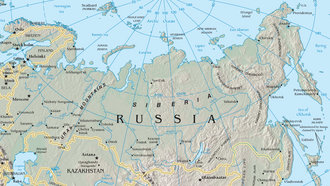
Normally, that would be a medical tragedy rather than an international mystery. But this particular woman worked at an institute in Siberia dedicated to studying plague and other dangerous infectious diseases.
Within days, hospitals were restricting access, hundreds of contacts were being monitored, international health agencies were asking questions, and rumors spread that a plague researcher had died after a laboratory accident.
That last part has not been proven.
But the circumstances were enough to get the world’s attention.
What Happened
Darya Shipilova, a 28-year-old employee of the Irkutsk Anti-Plague Research Institute of Siberia and the Far East, became seriously ill and was hospitalized in Shelekhov, near Irkutsk. She died on October 2, 2026.
Russian authorities described her illness as severe pneumonia of unknown origin. Because she worked at a facility that studies dangerous pathogens, public-health officials immediately treated the situation as potentially serious.
A hospital in Shelekhov was temporarily quarantined, contacts were identified and monitored, and around 200 people were initially placed under precautionary restrictions.
Russia’s public-health agency, Rospotrebnadzor, sent senior officials to the region and launched extensive laboratory testing.
That is where the story starts becoming unusual.
Why the Plague Rumor Started
The institute where Shipilova worked is not an ordinary medical laboratory.
It specializes in plague and other dangerous infectious diseases. Plague is caused by the bacterium Yersinia pestis, and pneumonic plague occurs when the infection reaches the lungs.
Unlike the better-known bubonic form, pneumonic plague can spread from an infected person through respiratory droplets during close contact.
So when an employee of an anti-plague laboratory dies from unexplained pneumonia, the obvious question is whether the two things are connected.
Unconfirmed reports quickly claimed there had been a laboratory accident and that Shipilova may have been exposed to plague bacteria.
Those reports spread widely online.
Russian authorities deny that such an accident occurred.
What Russia Says
Rospotrebnadzor says investigators found no incident at the institute involving dangerous microorganisms and no evidence that Shipilova’s illness was caused by pathogens connected with her job.
Authorities also say no plague has been detected among the people who had contact with her.
By October 7, Russian officials reported that nearly 5,000 laboratory tests had failed to detect dangerous pathogens. About 90 percent of the people initially placed in quarantine had been released.
Some contacts did test positive for ordinary respiratory viruses, including COVID-19 and viruses associated with common colds.
The problem is that Russia still has not publicly explained what killed Shipilova.
The official diagnosis remains pneumonia of unknown origin.
What the WHO Says
The World Health Organization is not saying Russia has a plague outbreak.
It is saying that more information is needed.
WHO officials confirmed that Shipilova died from severe pneumonia on October 2 and said that no cause of death had yet been officially established. The organization contacted Russian authorities under the International Health Regulations and asked for information about the laboratory testing, the reason for the extensive public-health response and the status of the people who had been in contact with her.
The WHO’s initial assessment placed the risk at moderate to low for the Irkutsk region, low for Russia as a whole and very low for the wider European region.
In other words, this is being watched closely.
It is not currently being treated as the beginning of another pandemic.
The Second-Case Question
The story became even more confusing when reports began circulating that another laboratory employee had developed pneumonia.
On October 7, WHO Director-General Tedros Adhanom Ghebreyesus said the organization had requested additional information from Russia about media reports involving a second employee with pneumonia of undetermined cause.
Reuters was unable to verify reports that a second person had died and found no evidence supporting social-media claims of another plague death.
That distinction is important.
There is currently a confirmed death from unexplained pneumonia.
There are reports of another possible pneumonia case.
There is not a confirmed second plague death.
Was There a Lab Release?
At this point, there is no public evidence proving that plague or another dangerous organism escaped from the Irkutsk institute.
There is also no confirmed evidence that Shipilova contracted anything at work.
The laboratory connection is circumstantial: she worked at a facility handling dangerous pathogens and then died from an unexplained respiratory illness.
That is enough to justify an investigation.
It is not enough to prove a laboratory leak.
The evidence currently available actually pushes in the opposite direction. Thousands of tests have reportedly failed to identify plague or another dangerous pathogen among contacts, and European health officials say there are no reported secondary cases or evidence of sustained human-to-human transmission.
But one question remains unanswered.
What caused the pneumonia?
Why the Secrecy Question Matters
Public trust becomes part of the story whenever an unexplained illness is connected to a high-security biological laboratory.
Russia says it has cooperated with international authorities and argues that much of the alarming reporting is false. The WHO, however, has repeatedly requested more complete information so it can independently assess the situation.
That gap creates room for rumors.
If the death was unrelated to laboratory work, identifying the actual pathogen would go a long way toward ending speculation.
If investigators cannot determine the cause, the mystery remains.
What Happens Next
The most important evidence will be laboratory results.
Investigators need to identify what caused Shipilova’s pneumonia and determine whether the reported second case actually exists. Continued monitoring of her contacts will also show whether anyone develops a related illness.
If no additional cases appear and another cause of death is identified, the plague theory may collapse quickly.
If additional unexplained pneumonia cases emerge among laboratory employees or close contacts, the situation becomes much more serious.
For now, neither has happened.
Why It Matters
This story is a good example of how quickly a real event can become mixed with an unproven explanation.
The death is real.
The laboratory is real.
The quarantine and contact tracing were real.
The unexplained pneumonia is real.
The plague outbreak is not confirmed.
The laboratory release is not confirmed.
Keeping those facts separate matters more than ever when a story involves a dangerous pathogen and memories of the COVID-19 pandemic.
Something happened in Irkutsk.
We just do not know exactly what yet.
T Funk Take
This is exactly the kind of story that immediately gets my attention.
A 28-year-old woman who works at a plague laboratory dies from pneumonia that nobody can explain. A hospital gets quarantined. Around 200 people are monitored. Then rumors start saying there was a lab accident.
You don’t have to be a conspiracy theorist to look at that and ask questions. But asking questions and deciding we already know the answer are two different things.
Right now, I don’t see evidence that plague was released from this laboratory. Thousands of tests are reportedly negative, nobody has confirmed plague among the contacts, and there does not appear to be a chain of people getting sick. That is all good news.
What bothers me is the phrase “pneumonia of unknown origin.” If Russian authorities are confident this had nothing to do with the laboratory, then eventually I want to know what did cause it. Maybe it was an ordinary infection that became severe. Maybe there is another explanation entirely. Until somebody identifies it, I think the questions are fair.
There is also a historical reason I am cautious about simply accepting reassurances from Moscow. During the 1986 Chernobyl disaster, radioactive contamination was detected in Sweden before the Soviet Union publicly acknowledged that a serious nuclear accident had occurred. Swedish and Finnish measurements on April 28 helped point investigators toward a source in the Soviet Union, and the USSR confirmed the Chernobyl accident later that evening.
Today’s Russian Federation is not the Soviet Union, and that history does not prove anyone is covering up what happened in Irkutsk. But it does explain why I think outside verification matters when Russian authorities say an unusual event is under control.
We have been through enough in the last few years to know that when unusual illnesses and laboratories appear in the same sentence, people are going to pay attention.
For now, I would put the plague-release theory in the “not supported by the evidence yet” drawer.
But I’m not closing the drawer.
Case remains open in the T Funk Era archive.
Sources & Further Reading
-
Russia says plague institute worker's death does not risk an epidemic
Reuters
View Source -
UN Geneva Press Briefing - 06 October 2026
United Nations Geneva / World Health Organization
View Source -
ECDC closely monitoring situation following case of pneumonia of unknown origin in Russia
European Centre for Disease Prevention and Control
View Source