Official Archive Record
Case File CF-0002
The Dyatlov Pass Incident
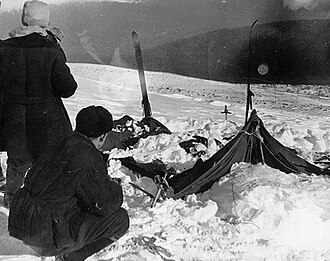
In February 1959, a group of experienced Soviet hikers entered the remote Ural Mountains and never returned. What should have been a difficult but ordinary winter expedition became one of the most famous unexplained deaths in modern history.
What Happened
The group, led by Igor Dyatlov, set up camp on a snowy mountain slope later associated with the name Dyatlov Pass. When searchers found the campsite, the tent had been damaged and appeared to have been cut open from the inside. The hikers’ belongings were still inside, suggesting they left in a hurry.
Their bodies were later found spread out across the area. Some were underdressed for the freezing conditions. Others had injuries that seemed unusual for a simple exposure case, including broken bones and severe trauma. The official Soviet investigation concluded that the group died because of an “unknown compelling force,” a phrase that helped turn the case into a permanent mystery.
Why It Matters
The Dyatlov Pass Incident matters because every explanation seems to answer one question while creating another. Avalanche theories explain panic and escape from the tent, but not every detail. Animal attacks, military testing, secret weapons, weather events, infrasound, and even stranger theories have all been suggested over the years.
Part of the mystery comes from the setting. A frozen mountain, a damaged tent, scattered bodies, missing answers, and an official investigation that sounded vague instead of final. Even modern explanations have not completely erased the feeling that something went very wrong out there.
T Funk Take
“Unknown compelling force” is not a good enough explanation for me.
Until every piece fits, Dyatlov Pass stays frozen in the archive.