
Official Archive Record
Case File CF-0101
Poisoned Halloween Candy: Razor Blades, Cyanide and the Urban Legend
Also known as: Halloween Sadism, Poisoned Candy Myth, Razor Blade in the Apple
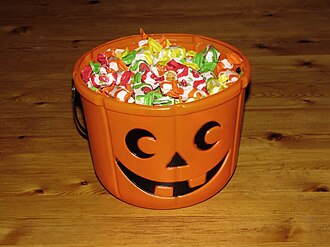
Every Halloween, millions of children bring home bags filled with candy from people they may barely know.
Then comes the second tradition.
Parents dump the candy onto the table and start inspecting it.
Look for holes in the wrappers. Throw away anything already opened. Be suspicious of homemade treats. Check the apples for razor blades. Watch for needles, drugs or poison hidden inside the candy.
Generations of Americans have grown up hearing the same warning: somewhere out there, a stranger may be waiting for Halloween to hurt a child.
There is just one problem.
Researchers have spent decades looking for that stranger.
What Happened
The fear is commonly called poisoned-candy mythology or, in academic research, “Halloween sadism.” Sociologist Joel Best began systematically studying reports of contaminated Halloween treats in the 1980s, reviewing newspaper coverage going back to 1958 and continuing to update the research afterward.
Reports do exist.
Parents and police have occasionally found candy containing pins, needles, pills or other foreign objects. Some incidents were reported by local news organizations and investigated by authorities.
But the pattern is very different from the story most of us were told as children.
Best’s research has not identified a substantiated case of a child being killed or seriously injured by a contaminated treat randomly received from a stranger while trick-or-treating. Many reported cases resulted in no injury, while others turned out to be hoaxes, misunderstandings or incidents involving someone the child already knew.
That distinction is important.
Saying the classic story is an urban legend does not mean nobody has ever tampered with a piece of candy. It means the widespread image of anonymous neighbors routinely putting poison or razor blades into Halloween treats is not supported by the evidence.
The Deaths Behind the Fear
Several children’s deaths have been blamed on Halloween candy over the years, especially in the first hours after something tragic happened.
Follow-up investigations often told a different story.
In Detroit in 1970, five-year-old Kevin Totson died after exposure to heroin. The initial story suggested that the drug had been placed in his Halloween candy. Investigators later determined that the child had found heroin inside a relative’s home. The candy explanation was used afterward to disguise what had actually happened.
Other deaths initially blamed on Halloween treats were later attributed to natural causes or medical conditions.
Then came the case that permanently changed Halloween.
The Candy Man
On Halloween night in 1974, eight-year-old Timothy O’Bryan of Texas ate powdered candy from a large Pixy Stix.
It contained cyanide.
Timothy died.
This time the poisoned candy was real.
Police initially had exactly the nightmare scenario parents feared: a child had apparently received lethal candy while trick-or-treating. Authorities scrambled to locate other potentially contaminated treats.
But investigators eventually determined that the poison had not come from an unknown neighbor.
Timothy’s father, Ronald Clark O’Bryan, had given him the poisoned candy.
O’Bryan had recently taken out life insurance policies on his children and was experiencing serious financial problems. Investigators concluded that he poisoned several Pixy Stix, gave them to his own children and other children, and attempted to make his son’s death look like the work of a random Halloween killer.
Only Timothy ate the poisoned candy.
Ronald O’Bryan was convicted of capital murder and eventually executed in Texas in 1984.
The case was real, horrifying and enormously influential.
But it was not a stranger poisoning random trick-or-treaters.
It was a father murdering his son and using the existing fear of poisoned Halloween candy as cover.
What About Razor Blades and Needles?
Stories about sharp objects hidden inside apples and candy may be even more famous than poisoned treats.
There have been reports of pins, needles and other objects being discovered in Halloween food. Best’s research does not argue that every report was imaginary. What it shows is that the incidents are uncommon and that serious injuries are extremely difficult to document.
Many reported objects are discovered before anyone eats the food. Some incidents appear to have been pranks or hoaxes. Others cannot be independently verified.
The medical literature examined by Best also fails to provide the epidemic the folklore would suggest. He found only a handful of cases involving swallowed foreign objects even loosely connected to Halloween, and the circumstances did not establish the classic scenario of a stranger deliberately booby-trapping candy for children.
So the accurate answer is not “a needle has never been found.”
The accurate answer is that the evidence does not support the idea of widespread strangers secretly placing dangerous objects into Halloween treats.
Why Did Everyone Believe It?
The story works because it takes something parents already worry about and gives it a physical form.
Children are walking through dark neighborhoods at night. They are approaching strangers. Those strangers are giving them food.
Everything parents normally teach children not to do becomes temporarily acceptable on Halloween.
Then add frightening news stories, rumors from other parents, police warnings and a real murder involving poisoned Halloween candy.
The legend almost writes itself.
By the 1980s, some hospitals were even offering to X-ray Halloween candy for hidden metal objects. The practice made the danger feel official, even though researchers questioned whether widespread screening was useful.
Once parents begin checking candy, the ritual also reinforces the belief.
We inspect the candy because dangerous people might tamper with it.
Then another generation grows up remembering that their parents always inspected their candy, which seems like evidence that there must have been something to worry about.
The precaution becomes part of Halloween itself.
So Should Parents Still Check Candy?
Probably.
Not because the evidence suggests armies of Halloween poisoners are waiting behind neighborhood doors, but because checking food before a child eats it is simple common sense.
The U.S. Food and Drug Administration still recommends that parents inspect Halloween treats before children eat them. It advises avoiding unwrapped items and looking for unusual discoloration, tiny holes, torn wrappers or anything else that appears suspicious.
There are also more ordinary risks to consider, including food allergies and choking hazards for young children.
So the research and the safety advice are not actually contradictory.
The chance that a stranger deliberately poisoned a candy bar may be extraordinarily small.
Throwing away a candy bar with a torn wrapper is still a perfectly reasonable thing to do.
Why It Matters
The poisoned-candy story is a good example of how an urban legend can contain a little truth without the larger story being true.
Candy has been tampered with.
Sharp objects have occasionally been reported.
A child really was murdered with poisoned Halloween candy.
But when the most famous cases are examined closely, the anonymous Halloween stranger largely disappears.
The greatest tragedy associated with poisoned Halloween candy came from inside the victim’s own family.
Decades of warnings transformed that crime and scattered reports of tampering into a nationwide ritual of inspecting every Snickers bar and Reese’s Cup before children are allowed to eat them.
Sometimes the legend may be more powerful than the evidence.
T Funk Take
I remember the warning like everybody else probably does.
Check the candy.
Look for holes in the wrappers. Don’t eat anything homemade. Watch out for razor blades in apples. Somewhere out there was apparently a maniac spending Halloween carefully stuffing dangerous objects into children’s candy.
The strange part is that when you actually start looking for the victims, they are incredibly difficult to find. I have never personally known anyone who got Halloween candy that had been tampered with.
That is actually a positive thing.
For the most part, we can trust the candy we get from our neighbors. It is part of the same honor system we rely on at restaurants, church potlucks and family dinners. Someone prepares or hands us food, and we trust that they are not trying to hurt us.
The most famous poisoned Halloween candy case did involve real poison and a real death.
But it came from inside the family.
That one terrible incident was enough to help set the whole fear in motion.
So yes, check the candy.
But it is also worth remembering that, for the most part, millions of people participate in this strange little neighborhood tradition every year without trying to hurt anybody.
Case closed in the T Funk Era archive.
Sources & Further Reading
-
Halloween Sadism: The Evidence
Joel Best — University of Delaware
View Source -
Halloween Food Safety Tips for Parents
U.S. Food and Drug Administration
View Source -
Today in History, Nov. 2, 1974: A Killer Speaks to the Chronicle
Houston Chronicle
View Source