Official Archive Record
Case File CF-0045
The Patterson–Gimlin Film
Also known as: Patterson Film, Patterson–Gimlin Footage, Bluff Creek Film, 1967 Bigfoot Film
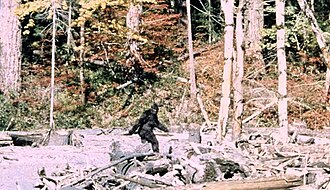
In October 1967, Roger Patterson and Bob Gimlin were riding in the Bluff Creek area of Northern California when they claimed to see a large, hair-covered figure walking near a creek bed. Patterson grabbed his camera and filmed the creature as it turned and walked away.
What Happened
The footage became known as the Patterson–Gimlin Film. It is short, shaky, and grainy, but it shows a dark, upright figure moving across the open ground. The subject, often nicknamed “Patty,” appears broad, heavy, and covered in hair.
To believers, the film remains one of the strongest pieces of Bigfoot evidence ever captured. They point to the figure’s movement, body proportions, apparent muscle motion, and the difficulty of creating a convincing suit in 1967.
To skeptics, the film is probably a hoax. They argue that it could show a person in a costume, and that Patterson’s interest in Bigfoot raises questions about motive and setup. For decades, the film has been studied, stabilized, enlarged, argued over, and rewatched frame by frame.
No one has produced the creature. No suit has been universally accepted as the original. No explanation has closed the case for everyone.
Why It Matters
The Patterson–Gimlin Film matters because it became the defining image of Bigfoot. Before the internet, before modern trail cameras, and before endless paranormal television shows, this short strip of film gave the legend a body, a walk, and a face turned briefly toward the camera.
It also shows the power of visual evidence. A written Bigfoot report can be dismissed. A footprint can be faked. But a moving figure on film creates a different kind of argument. People can watch the same footage and come away with completely different conclusions.
That is why the film has survived. It does not prove Bigfoot to everyone, but it refuses to disappear.
T Funk Take
The Patterson–Gimlin Film is one that goes back a long time for me. One of the first pictures I ever saw in a book was of “Patty.” To me, a book felt like an authoritative window into the outside world. If it was printed in a book, it seemed possible. So yes, it seemed legitimate that there could be monsters out in the woods.
As I grew older and wiser, I became aware that what was actually filmed that day is still up for debate. What do you think of the film when you watch it? I can see what looks like a head with convenient eye holes, almost like a mask. Then I think about how a chimpanzee’s face also has little hair around the eyes. Then I remember the alleged financial problems Patterson was having at the time of the encounter.
But then the tables turn again.
I think about the choices that were made. If I were going to plan a hoax, which still feels like the most likely explanation, I would want the monster to be massive. Terrifying. Teeth, claws, yelling, aggression. I would want something dramatic enough to sell for a fortune, especially if I needed money desperately.
Then we look at the film again, and we see breasts. It looks back, then keeps moving. No attack. No roar. No grand monster reveal. Just an animal noticing people and trying to leave.
Don’t real animal encounters often go that way?
The scuffle at the beginning of the film is said to be when Patterson’s horse reared and threw him off. That could be convenient. It could also be exactly what would happen if a horse saw something it did not understand.
“Well, all of that makes it more believable.”
“Exactly,” he said.
Until somebody finds the suit, the body, or Patty’s forwarding address, this one stays open.
Sources & Further Reading
-
Grover Sanders Krantz Papers
Smithsonian Institution
View Source -
Why Do So Many People Still Want to Believe in Bigfoot?
Smithsonian Magazine
View Source -
Patterson-Gimlin Film Research Papers
Relict Hominoid Inquiry / Idaho State University
View Source