Official Archive Record
Case File CF-0129
Kushtaka: Alaska’s Mysterious Land Otter People
Also known as: Kushtaka, Kóoshdaa Káa, Kooshdaa Kaa, Land Otter Man
What Happened
In the rainforests, islands and waterways of Southeast Alaska, Tlingit oral traditions describe powerful beings connected with the land otter. Today they are commonly called Kushtaka, while modern Tlingit sources use forms such as Kóoshdaa Káa, often translated as “land otter person.” The stories are much more complicated than the popular image of an otter-shaped monster wandering through the woods, because humans, animals and the spiritual world can overlap in ways that do not fit neatly into modern cryptid categories.
Sealaska Heritage Institute’s Tlingit dictionary identifies kóoshdaa as the land otter or river otter, the North American river otter that inhabits Southeast Alaska’s waterways. Traditional narratives go further by describing land otter people capable of appearing human, influencing people’s minds and drawing individuals away from ordinary human society. In some stories, a person taken by them can eventually become one of them.
The Land Otter
The animal behind the tradition is not the sea otter floating offshore with its young on its stomach. In Southeast Alaska, “land otter” refers to the river otter, an animal equally comfortable around streams, beaches, forests and coastal waterways. That ability to cross between water and land may help explain why the otter occupies such a powerful boundary position within traditional stories.
Archaeologist Madonna Moss notes that Tlingit cultural relationships with land otters extend far beyond viewing them simply as wildlife. Ethnographic records describe them as spiritually powerful beings capable of moving between human and animal forms, while some people lost at sea or taken by land otters could themselves become land-otter people. The otter therefore occupies a space between ordinary animal, supernatural being and transformed person.
People Who Disappear
One recurring theme involves someone becoming separated from the human community. A person may become lost, survive a boating accident or disappear into an isolated coastal landscape, only to encounter beings who appear human but are actually connected with the land otters. The danger is not always being physically killed; it can be losing one’s connection to ordinary human life.
A Tlingit narrative preserved by the Alaska Native Language Archive describes Kaakáa encountering Kóoshdaa and eventually being taken away. One of the land otters assumes the form of his wife, and Kaakáa later encounters a female relative who had also previously been taken by the Kóoshdaa. The story demonstrates that transformation and imitation of familiar people are genuine elements of recorded Tlingit tradition rather than inventions of later paranormal retellings.
They Can Look Human
Modern descriptions frequently call the Kushtaka a shapeshifter, which is not completely wrong but can oversimplify the older material. The beings may appear in recognizable human form, and people who have spent too long among them can become increasingly separated from their original identity. In some narratives, the distinction between a land otter pretending to be human and a human transformed into a land-otter person becomes deliberately difficult to define.
The Dauenhauers’ Haa Shuká, Our Ancestors, based on narratives from Tlingit tradition bearers, includes references to Kóoshdaa Káa appearing in human form to lure people away. Notes accompanying the traditional narratives describe victims eventually becoming land-otter people themselves. That is considerably stranger than the simplified image of one half-human, half-otter creature hiding in the forest.
The Ones Who Rescue You
The land otter people are not always presented as simple predators. One origin narrative recorded by anthropologist John R. Swanton in the early twentieth century describes Raven telling the land otter that it would live both on land and in water. Raven also tells it that when a canoe capsizes, the land otter will save the people and make them its friends.
The problem is what “saving” someone means. A person rescued from drowning may survive physically but become separated from human society and incorporated into the world of the land otters. This gives the stories an unusual ambiguity because a supernatural being can rescue someone from immediate death while simultaneously taking them somewhere their family desperately wants them back from.
Losing Yourself
Some early narratives describe people spending so much time with the land otters that their thinking changes. Swanton recorded a tradition in which land otters could affect the minds of people who had remained with them for an extended period, eventually turning them against their own friends. The danger therefore involved identity and belonging as much as physical attack.
That theme appears repeatedly in stories around the world where someone enters another realm and gradually stops belonging to the human one. In the Kushtaka traditions, however, it is specifically connected with the coastal environment of Southeast Alaska and the culturally significant land otter. A missing person might still exist somewhere, but no longer in the same way that relatives remembered them.
The Connection to Shamans
Land otters also had an important relationship with Tlingit spiritual practitioners. Historical and anthropological sources describe the land otter as a particularly powerful spirit helper sought by shamans, even though ordinary people might fear encounters with them. The same supernatural power that made the beings dangerous could therefore become a source of spiritual ability.
Swanton recorded a tradition in which a person recovered after being taken by land otters could become a shaman. That creates another contradiction that makes the stories difficult to reduce to a simple monster legend: contact with the land otter world could be terrifying and dangerous while also connecting someone with extraordinary spiritual power.
The Wilderness Makes Sense
Southeast Alaska provides an effective landscape for stories about people disappearing between worlds. Dense temperate rainforest reaches directly to rocky shorelines, islands are separated by cold channels and much travel traditionally depended on boats moving through difficult coastal conditions. Fog, storms, darkness and rapidly changing weather can separate people from one another with very little warning.
River otters are also unusually suited to that landscape. They move through water, disappear beneath the surface and then emerge on shore or vanish into vegetation. An animal already capable of crossing boundaries that humans experience as separate provides a natural figure for stories about crossing another boundary between human and nonhuman worlds.
Not Just a Cryptid
Modern paranormal culture often turns the Kushtaka into an Alaskan cryptid described as an otter-human creature that physically stalks hikers. That version is easy to understand because it places the being alongside Bigfoot, Dogman or other creatures treated as unknown animals waiting to be discovered. The traditional material does not fit that model very well.
The older narratives are concerned with spiritual relationships, transformations, community, survival and what happens when someone becomes separated from their people. Kóoshdaa Káa is therefore better understood first within Tlingit tradition rather than as an undiscovered zoological species. Searching for footprints of an “otter man” misses much of what the stories are actually about.
The Stories Were Recorded Early
One reason the case is important is that there is a substantial documentary trail for the tradition itself. Swanton collected Tlingit narratives at Sitka and Wrangell in 1904, publishing them as Tlingit Myths and Texts through the Smithsonian Institution’s Bureau of American Ethnology in 1909. Those records contain multiple land-otter narratives and demonstrate that the tradition was already established well before today’s internet cryptid culture.
Later Tlingit-language recordings preserved by the Alaska Native Language Archive provide another level of documentation because tradition bearers can be heard telling stories in Tlingit rather than only appearing through an outside writer’s summary. Those recordings include stories specifically concerning Kóoshdaa and Kóoshdaa Káa, allowing modern researchers to connect older published accounts with continuing oral tradition.
Could Ordinary Otters Explain It?
Real river otters almost certainly contributed to the imagery surrounding the stories, but identifying the animal does not explain away the tradition. An otter swimming through dark water, standing briefly upright or disappearing into the forest could certainly create a strange encounter, especially at night. Ordinary wildlife, dangerous waterways and people becoming lost could all contribute to individual stories.
That still would not explain the cultural meaning attached to Kóoshdaa Káa. The transformation stories, connection with shamans and repeated theme of humans becoming incorporated into the land-otter world belong to a larger spiritual framework rather than a simple case of someone misidentifying an animal. The natural and supernatural elements cannot be separated cleanly without changing the tradition being examined.
A Historical Object Survives
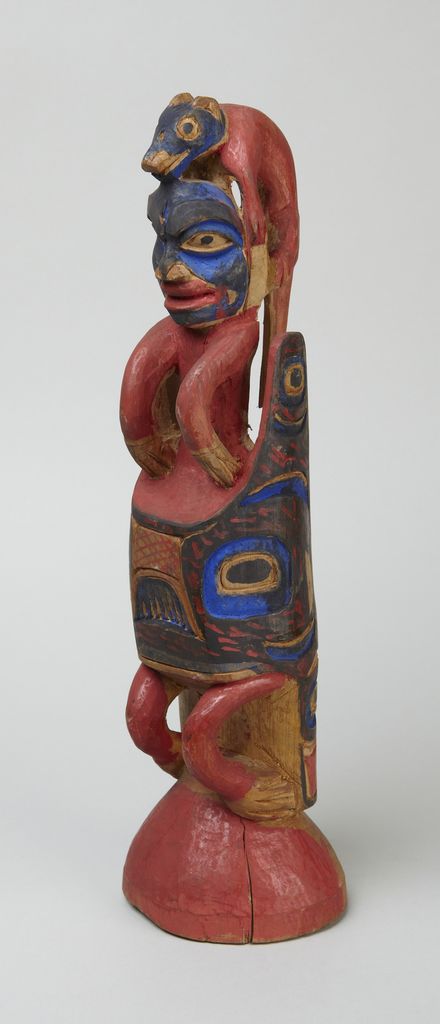
The tradition is also represented in material culture. Princeton University Art Museum holds a Lingít wooden figure identified as Kóoshdaa-káa, or land otter man, collected in Alaska before 1882. The existence of an object carrying that identification decades before Swanton published his accounts adds another independent piece of evidence showing that land-otter-person traditions were established in the nineteenth century or earlier.
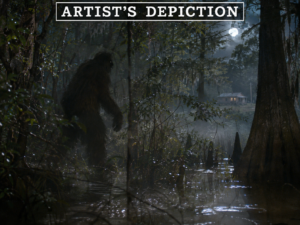
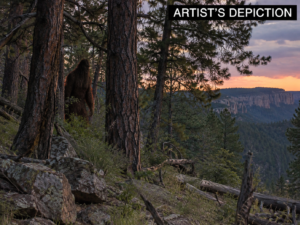
The figure does not prove that a supernatural being physically existed, but it is important evidence that the concept itself was culturally real. It also gives the Case File something rare for a folklore subject: a historical object connected directly with the name and tradition rather than a modern artist guessing what the creature should look like.
Why It Matters
The Kushtaka is a good example of why Indigenous supernatural traditions should not automatically be converted into cryptid reports. The stories preserve ideas about the relationship between humans, animals, dangerous landscapes and the spiritual world, and those meanings can disappear when the story is rewritten as nothing more than an unidentified creature sighting.
At the same time, there is a genuine mystery at the heart of the tradition. People disappear in remote places, survivors can experience disorientation or trauma, wildlife can behave unexpectedly and stories can preserve memories for generations. None of that proves literal shapeshifting land-otter people, but it does explain why a tradition rooted in the dangerous coastal environment of Southeast Alaska could remain powerful for a very long time.
T Funk Take
This is one where I don’t think we should take somebody else’s cultural tradition, slap “cryptid” on it and start talking about trail cameras. The older stories aren’t just saying there is some eight-foot otter guy hiding behind a tree. They’re talking about people getting lost, being taken away, losing who they are and sometimes coming back changed.
The part I find most interesting is that the land otter isn’t always just the monster. In some stories it saves people from drowning, but then being saved means you might end up becoming part of its world instead of returning to yours. That’s a much stranger idea than something simply chasing you through the woods.
I can absolutely see the real landscape helping these stories develop. Cold water, islands, fog, forests and people traveling by canoe create plenty of ways for somebody to disappear, while river otters themselves move between water and land in a way that probably looked even more mysterious before anybody had wildlife cameras following them around. That gives me plenty of normal ingredients for strange experiences without needing a literal shapeshifter.
What makes the case worth keeping is that the tradition itself is very well documented. We’ve got early written accounts, later Tlingit recordings and even a nineteenth-century Lingít figure identified as Kóoshdaa-káa. I don’t see physical evidence proving people can turn into land otters, but as an Alaska Native supernatural tradition this is a lot deeper than the internet version makes it sound, and Kushtaka belongs in the T Funk Era archive.
Sources & Further Reading
-
[A.P. Johnson in Sitka] — Kaakáa / Kóoshdaa Káa Oral Narrative
Alaska Native Language Archive — University of Alaska Fairbanks
View Source -
Tlingit Myths and Texts
Smithsonian Institution — Bureau of American Ethnology
View Source -
An Ethnozooarchaeological Study of Land Otters and People at Kit’n’kaboodle (49-DIX-46), Dall Island, Alaska
BC Studies: The British Columbian Quarterly — University of British Columbia
View Source