
Official Archive Record
Case File CF-0117
Vampires: From the Restless Dead to Dracula
Also known as: Vampire, Vampyre
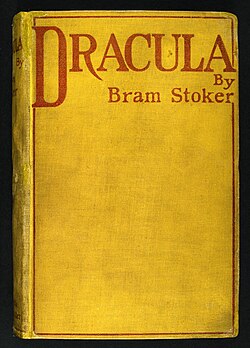
For most people today, the word vampire brings up a familiar image: pale skin, sharp fangs, a black cape and an aristocratic stranger who survives by drinking human blood. That version of the creature owes a great deal to nineteenth-century fiction and especially Bram Stoker’s Dracula. The vampires feared by earlier European communities were often much less elegant. They were corpses believed to have returned from the grave to attack relatives, spread disease or drain the life from the people around them.
Belief in dangerous returning dead existed in many cultures long before the modern word vampire became common, but a particularly intense series of vampire scares spread through central and southeastern Europe during the seventeenth and eighteenth centuries. Villagers opened graves, examined corpses and sometimes burned, decapitated or staked bodies they believed were responsible for unexplained deaths. What looks like monster folklore today could become a deadly serious public-health problem to the people experiencing it.
Before Dracula
The older European vampire was closely related to the broader idea of the revenant, a dead person who returned to trouble the living. These beings were not necessarily handsome, immortal noblemen hiding in castles. A suspected vampire could simply be a recently deceased neighbor whose family members began getting sick shortly after the funeral.
Communities without modern knowledge of infectious disease had a difficult problem when several people in the same household died one after another. If the first person buried appeared strangely preserved when the grave was reopened, the corpse itself could become the explanation. The dead person had returned, people reasoned, and was somehow draining the remaining family members.
That belief created a grim but understandable logic. Stop the corpse and perhaps the deaths would stop. Depending on the local tradition, that could mean driving a stake into the body, cutting off the head, burning the remains or performing some combination of rituals intended to prevent the dead from returning again.
The Vampire Panic of the 1700s
Vampire reports became especially famous during the early eighteenth century in territories controlled by the Habsburg monarchy along its frontier with the Ottoman Empire. These were not simply stories collected generations later because government and military officials sometimes investigated the alleged outbreaks. Their reports helped carry the word and the idea of the vampire into western European newspapers, books and intellectual debates.
One famous case involved Petar Blagojević, also rendered Peter Plogojowitz, who died in the Serbian village of Kisiljevo in 1725. After several other villagers died, residents claimed Blagojević had returned after death and attacked them. Local authorities eventually opened his grave in the presence of an imperial official.
The corpse reportedly appeared unusually fresh, with what observers interpreted as new skin, hair growth and blood around the mouth. Those features were accepted as evidence that the dead man had been feeding on the living. His body was staked and burned, creating one of the best-documented early vampire cases in Europe.
Arnold Paole
Another outbreak centered on a Serbian man commonly known as Arnold Paole. According to the story recorded by Austrian officials, Paole had previously claimed that he had been attacked by a vampire and had attempted to protect himself using traditional remedies. He later died after an accident, and villagers eventually blamed him for a new series of deaths.
His corpse was exhumed and reportedly showed the same disturbing features seen in other supposed vampires: limited decomposition and fresh-looking blood. The body was destroyed, but several years later another group of unexplained deaths in the area triggered a larger investigation. Austrian military surgeon Johannes Flückinger examined numerous corpses and produced a formal report describing which bodies appeared normally decomposed and which seemed suspiciously preserved.
The report circulated beyond the region and helped turn a local supernatural belief into an international subject. European scholars suddenly had testimony from military officers, doctors, priests and government officials describing corpses that villagers insisted were vampires. The question was no longer merely whether peasants believed in the undead, but whether educated Europeans should believe witnesses who claimed to have physically examined them.
What They Were Seeing in the Graves
Many of the classic signs of vampirism now have ordinary explanations related to decomposition. A corpse can swell as gases accumulate, forcing blood-colored fluid from the nose or mouth. Skin can retract as it dries, making hair and fingernails appear to have continued growing even though no growth occurred after death.
Temperature, soil conditions, depth of burial and the length of time underground can also produce enormous differences in decomposition. A body that villagers expected to find skeletal or rotten might instead appear disturbingly recognizable. Without modern forensic knowledge, finding a relatively intact corpse with fluid around its mouth could look exactly like evidence that the dead person had recently fed.
Even reports of a corpse groaning when staked have possible physical explanations. Pressure placed on a decomposing body can force trapped gases through the throat and produce sounds. To frightened witnesses already convinced they had found a vampire, however, a body appearing to bleed or make noise while being pierced would probably seem like confirmation that it had still been alive in some unnatural way.
Disease and the Vampire
Vampire panics frequently appeared alongside clusters of disease. When one person died and relatives began wasting away afterward, the sequence could look like an attack continuing beyond the grave. Modern medicine recognizes that people sharing a household also share exposure to contagious illnesses, but that connection was much harder to understand before germ theory.
The vampire therefore provided an explanation that connected the deaths together. The first victim had not merely died; that person had become the cause of the later deaths. Exhuming and destroying the suspected corpse offered the community something practical it could do against a threat that otherwise seemed invisible.
This pattern later appeared in New England as well, particularly during outbreaks of tuberculosis in the eighteenth and nineteenth centuries. Communities sometimes exhumed dead relatives when other family members developed the same wasting illness. They did not always use the European word vampire, but the underlying idea that the dead could consume the health of the living was remarkably similar.
Scholars Investigate the Undead
The vampire panic eventually attracted the attention of European scholars. Benedictine scholar Augustin Calmet published a major eighteenth-century study examining reports of apparitions, spirits and vampires from places including Hungary, Bohemia, Moravia and Silesia. He collected testimony seriously enough that later critics accused him of encouraging belief in the supernatural.
Calmet ultimately did not need literal vampires to explain the phenomenon. The unusual condition of corpses could result from natural decomposition while frightened communities interpreted what they saw through existing folklore. The debate became part of a larger Enlightenment argument about evidence: how should educated people respond when apparently trustworthy witnesses describe something that seems impossible?
That is one of the most interesting parts of the historical vampire panic. Officials really did inspect graves, witnesses really did sign reports and communities really did believe they had found physical evidence. The documentation proves that vampire investigations occurred, but documentation of an investigation is not the same thing as proof that the supernatural explanation was correct.
The Vampire Becomes a Gentleman
The creature began changing dramatically when writers brought it into nineteenth-century literature. John Polidori’s 1819 story The Vampyre introduced readers to Lord Ruthven, an aristocratic and socially sophisticated vampire. Instead of a swollen village corpse climbing from a grave, the vampire could now move comfortably among the wealthy and respectable.
That transformation became enormously influential. The vampire was no longer just something villagers dug out of a cemetery; it could be attractive, intelligent and capable of hiding in plain sight. Fiction gradually added characteristics that modern audiences often assume came directly from ancient folklore.
The massive serialized story Varney the Vampyre, published beginning in the 1840s, helped develop the recognizable physical appearance even further. The British Library identifies Varney as an important early work in which the vampire was depicted with fangs or sharpened teeth. By the end of the century, literature had transformed the vampire into something very different from the corpses examined during the Serbian scares.
Dracula Changes Everything
Bram Stoker’s Dracula, published in 1897, did not invent the vampire, but it created the version that became culturally dominant. Count Dracula was an aristocratic Transylvanian predator who drank blood, possessed supernatural abilities and carried the threat of vampirism from eastern Europe into Victorian England. Stoker combined existing vampire literature, folklore and Gothic fiction into a character powerful enough to reshape the entire legend.
Some familiar vampire traits appear in the novel, while others became standardized through later stage productions and films. Dracula could transform into animals including a bat or wolf, helping strengthen the connection between vampires and bats in popular culture. The elegant cape-wearing figure familiar from twentieth-century films owes as much to theatrical and cinematic adaptation as it does to older European folklore.
The difference between Petar Blagojević and Count Dracula is enormous. One was a dead villager whose neighbors opened his grave because people around them were dying, while the other was a calculating aristocrat traveling internationally and deliberately hunting victims. Over roughly two centuries, the vampire had moved from cemetery folklore into one of the most recognizable fictional monsters in the world.
Vlad the Impaler
Dracula’s name also created one of the most persistent pieces of vampire mythology. Stoker encountered the name Dracula while researching his novel, and the historical Vlad III of Wallachia, better known today as Vlad the Impaler, has since become closely associated with the fictional count. Vlad was a real fifteenth-century ruler remembered for brutal warfare and executions, particularly impalement.
The connection should not be stretched too far. Vlad III was not a vampire in Romanian history, and the older European vampire tradition did not originate with him. The historical ruler and the fictional count became increasingly fused in modern popular culture after Dracula became famous.
That distinction matters because the history of vampires is already strange enough without needing to turn Vlad into an undead blood drinker. The vampire panic was taking recognizable form from regional folklore and burial beliefs, while Stoker’s novel was a much later literary creation. Dracula eventually became so influential that the fictional character began rewriting how people imagined the folklore that came before him.
Why Garlic, Stakes and Sunlight?
There is no single ancient vampire rulebook. Different regions had different beliefs about what caused vampirism and how a dangerous corpse should be stopped. Stakes, decapitation, burning, religious objects and various protective plants or rituals appeared in different traditions, but the combination familiar from movies was assembled gradually.
Popular literature, theater and film standardized the monster because stories work better when audiences understand the rules. Eventually a vampire became something with recognizable weaknesses and abilities: blood drinking, fangs, stakes, crosses, bats, coffins and an aversion to sunlight. Many of those traits have historical roots, but their modern combination is largely a product of storytelling.
That means asking what a “real” traditional vampire was supposed to be can produce several different answers. The Serbian villager examining an undecayed corpse, the nineteenth-century reader following Lord Ruthven and the twentieth-century moviegoer watching Dracula were all talking about vampires. They were simply talking about creatures that had changed with the culture around them.
Why It Matters
The vampire legend is useful because we can watch folklore, medicine and fiction changing the same monster over time. Early communities used the vampire to explain unexplained deaths and disturbing conditions found in graves. Enlightenment scholars turned those claims into arguments about evidence and superstition, while nineteenth-century writers transformed the corpse into a sophisticated predator.
The modern vampire carries pieces of all of those versions. It still returns from the dead and feeds on the living, but it also carries literary traits added hundreds of years after the earliest scares. Dracula did not create the vampire, but he became so successful that he almost buried the older creature underneath him.
T Funk Take
I always pictured the old vampire legend as basically Dracula before Dracula existed, but that really isn’t what happened. The early version sounds less like a guy in a castle and more like your dead neighbor getting blamed because three more people in the family got sick after his funeral. Then somebody digs him up, sees blood-colored fluid around his mouth and suddenly everybody thinks they found the answer.
I can understand how that happened much more easily than I can believe the corpse was actually getting out of the grave every night. If I knew nothing about decomposition and opened a coffin expecting bones but found a bloated body that looked relatively fresh, had fluid around its mouth and made a noise when somebody drove a stake into it, I would probably have some questions too. They were interpreting real physical processes with the information they had available.
The part I really like is watching the monster evolve. We go from villagers staking corpses, to scholars arguing about whether the reports can be trusted, to Lord Ruthven, Varney the Vampyre and finally Count Dracula walking around in an entirely different social class. Somewhere along the way the disgusting graveyard corpse got a wardrobe upgrade and became charming.
I don’t see evidence that supernatural blood-drinking corpses were actually climbing out of European graves, but the vampire legend itself is absolutely real history. People exhumed bodies because of it, government officials documented investigations and writers eventually turned those fears into one of the most successful monsters humans have ever created. The vampire may not have survived the grave, but the story certainly did, and that keeps it in the T Funk Era archive.
Sources & Further Reading
-
Killing the Dead
The Queen's College, University of Oxford
View Source -
Decomposing Bodies in the 1720s Gave Birth to the First Vampire Panic
Smithsonian Magazine
View Source -
Bats: Spooky Superheroes?
Library of Congress — American Folklife Center
View Source