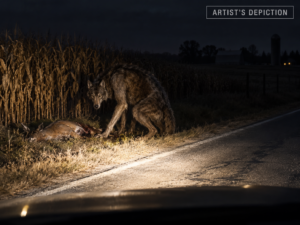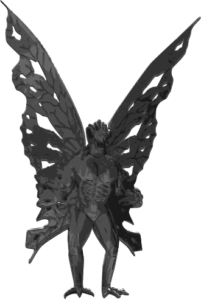
Official Archive Record
Case File CF-0104
The Jersey Devil: Nightmare of the Pine Barrens
Also known as: Leeds Devil, Devil of Leeds, Jersey Devil
For more than two centuries, people in southern New Jersey have told stories about something strange living in the Pine Barrens.
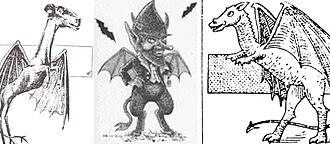
It has been described with a horse-like head, bat wings, hooves, a long tail and glowing eyes. Witnesses have blamed it for screams in the woods, strange tracks in the snow and frightening encounters on lonely roads.
Today it is known as the Jersey Devil.
But before it became one of America’s most famous cryptids, it was the Leeds Devil, and the story behind the monster may be almost as strange as the creature itself.
The Mother Leeds Legend
The best-known version of the story begins in the Pine Barrens in 1735.
According to legend, a woman remembered as Mother Leeds was pregnant with her thirteenth child. Exhausted and overwhelmed, she supposedly cursed the unborn baby and declared that it might as well be the devil.
When the child was born, the story says it transformed.
Different versions describe horns, hooves, claws, wings, a horse-like head and a long tail. The creature attacked or frightened the people in the room before escaping through the chimney and disappearing into the surrounding wilderness.
From there, the Leeds Devil supposedly made the Pine Barrens its home.
There are many variations of this story. In some versions Mother Leeds was cursed. In others, the child was born deformed and later transformed into folklore. Some accounts involve religion, witchcraft or punishment for improper behavior.
There is no historical evidence that a woman literally gave birth to a winged monster.
There was, however, a real Leeds family.
The Leeds Family
Historians have found another possible explanation for how the legend developed.
Daniel Leeds was a real colonial-era publisher who produced almanacs containing astrological material. His writings caused conflict with members of the Quaker community, who considered some of his ideas inappropriate or heretical.
Leeds eventually broke with the Quakers, converted to Anglicanism and published material attacking his former religious community. His political associations also made the family unpopular with some colonists.
The conflict continued through his son, Titan Leeds.
Titan became involved in a famous publishing feud with Benjamin Franklin. Franklin jokingly predicted Titan Leeds’ death in Poor Richard’s Almanack. When Leeds objected, Franklin later joked that Leeds must actually be dead and that the person responding to him was a ghost.
The Leeds family had become connected with devils, ghosts, astrology and political controversy long before the modern monster legend took its familiar shape.
There was another interesting detail.
The Leeds family crest featured a wyvern, a dragon-like creature with wings.
Historians Brian Regal and Frank Esposito have argued that the supernatural reputation of the Leeds family, political attacks against them and imagery associated with the family may have gradually contributed to the creation of the Leeds Devil legend.
If that interpretation is correct, the Jersey Devil may have begun as an insult before it became a monster.
The Monster Takes Shape
By the nineteenth century, stories about a Leeds Devil were circulating in the Pine Barrens.
Descriptions were not always consistent. Some accounts emphasized a winged creature, while others described something closer to an unusual animal. Over time, features such as wings, hooves, a horse-like head and a long tail became increasingly associated with the legend.
The isolated landscape helped.
The New Jersey Pine Barrens cover a large area of forests, sandy roads, swamps and wetlands. Before modern transportation, many communities in the region were relatively isolated.
A strange cry in the woods or an unidentified animal seen briefly at night had a ready-made explanation.
The Leeds Devil was out there.
The Panic of 1909
The Jersey Devil became a major public sensation in January 1909.
Reports of strange tracks began appearing across southern New Jersey and around Philadelphia. Residents claimed to hear unusual cries or see bizarre flying creatures. Newspapers published story after story about the sightings.
One of the better-known reports came from Trenton councilman E.P. Weeden, who said he heard something flapping outside his home and later found unusual hoof-like tracks in the snow.
Then the reports multiplied.
People across New Jersey, Pennsylvania and Delaware claimed to see or hear the creature. Descriptions included wings, hooves, glowing eyes, a horse-like head and a body that some witnesses compared to a kangaroo.
Fear spread quickly.
According to historical accounts, some schools and workplaces experienced closures or reduced attendance because people were afraid to travel. Armed groups went looking for the creature, and police reportedly received their own sightings and complaints.
For several days, the Jersey Devil was no longer just an old Pine Barrens story.
People thought it was actually loose.
The Problem With the Sightings
The 1909 outbreak produced plenty of stories but very little reliable evidence.
Descriptions of the creature varied dramatically. Witnesses did not agree on its size, shape or even how it moved. Some reports involved a flying animal, while others described something running on the ground.
Strange footprints were photographed and discussed, but none established the existence of an unknown creature.
The publicity also encouraged hoaxes.
Once newspapers were publishing Jersey Devil stories every day, almost any strange noise, track or animal could become another sighting. The resulting panic is now as important to the legend as the alleged creature itself.
After the frenzy faded, no body, skeleton or unknown species remained behind.
What Could People Have Seen?
Several ordinary animals have been suggested as explanations for Jersey Devil sightings.
Large owls can produce frightening cries and appear much larger than expected when flying at night. Sandhill cranes have long legs, large wings and loud calls. Deer can leave confusing tracks in snow, particularly when prints overlap or partially melt.
Escaped exotic animals and deliberate hoaxes may explain some individual reports.
None of those explanations necessarily accounts for every story told over several centuries.
They may not have to.
The Jersey Devil legend could be the result of many unrelated events being collected under the same name. An owl heard by one person, strange tracks found by another and a deliberately fabricated monster seen by someone else can eventually become parts of one continuing story.
Once the legend exists, it gives people a way to interpret anything unusual they encounter in the Pine Barrens.
From Cryptid to State Symbol
The Jersey Devil survived long after the 1909 panic.
Sightings continued throughout the twentieth century, including reports of strange tracks, screams and unidentified animals. None produced physical evidence capable of confirming the creature.
But the legend became deeply connected with New Jersey culture.
When the state’s National Hockey League franchise needed a new name in 1982, fans voted to call the team the New Jersey Devils.
A creature supposedly born from a curse in the eighteenth century had become a professional sports mascot.
The monster was no longer just something people feared in the woods.
It belonged to New Jersey.
Why It Matters
The Jersey Devil is a perfect example of how cryptids can evolve.
The earliest ingredients may have involved a real colonial family, religious conflict, politics and supernatural insults. Over time, those pieces mixed with folklore about a monstrous birth and stories told throughout the Pine Barrens.
Then came newspaper coverage.
The enormous wave of publicity in 1909 transformed a regional legend into something much larger. People began interpreting tracks, noises and unidentified animals through a story they already knew.
Whether anyone ever encountered an unknown creature is impossible to establish from the surviving evidence.
What we can establish is that people became genuinely afraid of the Jersey Devil.
The monster may be unproven.
The legend definitely is not.
T Funk Take
This one feels like it was built for Halloween.
You have a cursed thirteenth child, bat wings, hooves, glowing eyes, and a monster flying up a chimney and disappearing into the Pine Barrens. If somebody invented the whole thing specifically to sell Halloween decorations, they probably couldn’t have done much better.
But the part I find most interesting is the real Leeds family. The fact that Titan Leeds was beefing with Benjamin Franklin somehow makes this feel like a much better piece of American history to me. Two guys publishing almanacs, arguing in print, taking shots at each other and turning it into something people still remember centuries later.
I also like the idea that Americans have been making almanacs full of strange things for a very long time. In a way, that is what we are doing here.
That makes me feel at home with the tradition of it. Question everything. Stay curious. Look into the strange story instead of immediately laughing it off. Maybe there is an explanation, maybe there isn’t, but at least go find out.
Apparently what this site really needs is a modern-day Benjamin Franklin for me to feud with so the T Funk Era almanac can reach its full potential.
As for an actual winged creature flying around New Jersey, I am still very skeptical.
But I love the story.
Case remains open in the T Funk Era archive.
Sources & Further Reading
-
Legend of the New Jersey Devil
The New Jersey Historical Society
View Source -
The Jersey Devil in Myth and History
New Jersey Council for the Humanities
View Source -
Jersey Devil
New Jersey Pinelands Commission
View Source