Official Archive Record
Case File CF-0092
1816: The Year Without a Summer
Also known as: Year Without Summer, Eighteen Hundred and Froze to Death, Poverty Year
Imagine waiting all winter for the growing season, planting your crops, and then watching frost return when summer should be feeding your family.
In 1816, parts of North America and Europe experienced extraordinary cold and disrupted harvests. Snow fell in New England. Food became scarce and more expensive.
The year acquired a name that still sounds impossible: the Year Without a Summer.
What Happened
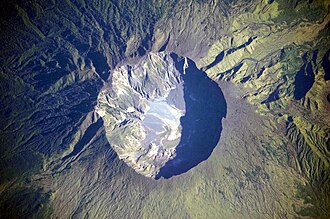
In April 1815, Mount Tambora erupted on the Indonesian island of Sumbawa. The eruption devastated nearby communities and sent material high into the atmosphere.
Its effects extended far beyond the area buried by volcanic debris. Atmospheric aerosols spread, reducing the sunlight reaching the surface and contributing to temporary cooling.
The following year, communities thousands of miles away experienced an unusually cold growing season. In parts of Europe, persistent wet weather added to the agricultural damage.
The name “Year Without a Summer” does not mean the entire planet remained frozen or that every day was cold. It describes severe seasonal disruption, especially remembered in northeastern North America and Europe.
Summer on the Calendar
In New England, summer snow and damaging frosts interrupted the season farmers depended on. Warm spells did not necessarily mean the danger had passed: temperatures could drop again and threaten surviving crops.
The National Park Service records June snow in locations including Albany, New York, and Dennysville, Maine. The year was also remembered as “Poverty Year” and “Eighteen Hundred and Froze to Death.”
For a farming household, the consequences extended beyond an uncomfortable summer. A lost harvest meant less food available for the months ahead.
A Disaster Without an Obvious Connection
Researchers examining historical records from the Czech Lands found evidence of an extremely cold summer in 1816, poor grain harvests, and sharply rising grain prices the following year.
The documents they studied did not directly connect the weather to Tambora. Contemporary explanations for cold summers included sunspots, comets, and longer-term cooling. The study combined written accounts with historical temperature and precipitation records to investigate what happened.
That gap between experiencing a disaster and understanding its cause is central to this case.
People could see the damaged crops. They could feel the cold and pay the higher prices. Identifying a distant eruption’s contribution required information that a local observation alone could not provide.
Why It Matters
The Year Without a Summer demonstrates how an event in one region can disrupt lives far beyond it.
It also shows why a familiar calendar can create a false sense of certainty. Planting, harvesting, storing food, and feeding livestock all depend on expectations about the seasons. When those expectations fail, the consequences spread through a community.
Tambora is a major part of the scientific explanation, but individual weather events and regional hardships should not all be reduced to one simple cause. The effects varied by location, and people’s ability to cope depended on more than temperature.
This case does not require a supernatural explanation to remain unsettling. The documented history is enough: communities endured a disastrous growing season while the connection to a distant volcano remained obscure.
The summer was on the calendar. The harvest people depended on was another matter.
T Funk Take
This is a reason not to assume the weather will always follow the pattern we expect. We have a relatively short record of detailed, worldwide observations. We can make forecasts and prepare, but we can’t predict everything coming our way.
Snow in June. What do you do when the growing season becomes another threat to your food supply?
This case centers on one disastrous season. Imagine conditions that took five or ten years to recover—or settled into something different from what we consider normal. What would that mean for humanity?
How much could we adapt? How long could we keep people fed?
The point is that our survival isn’t a lock. We have knowledge and technology, but we still depend on conditions we don’t fully control. A familiar climate can make that dependence easy to forget.
When we see an animal’s habitat being destroyed, we make conservation efforts. We try to understand what the species needs and how to preserve enough of its environment for it to survive.
We depend on our habitat too.
That doesn’t mean we’re helpless. It means preparation matters, and there are limits to what we can prevent or repair. Unfortunately, some things won’t change just because we need them to.
The Year Without a Summer stays filed under strange history—and a reminder that the conditions we depend on are never guaranteed.
Sources & Further Reading
-
Mount Tambora and the Year Without a Summer
University Corporation for Atmospheric Research — Center for Science Education
View Source -
1816 - The Year Without Summer
U.S. National Park Service
View Source -
Climate of the Past — European Geosciences Union / Copernicus Publications
Climate of the Past — European Geosciences Union / Copernicus Publications
View Source