Official Archive Record
Case File CF-0048
The Andrée Balloon Expedition
Also known as: Andrée's Arctic balloon expedition, S. A. Andrée Arctic expedition, Andrée North Pole expedition, Örnen expedition
The Andrée Balloon Expedition sounds like something invented for a strange-history novel: three men, a hydrogen balloon, the North Pole, and the terrible confidence of the 1890s.
What Happened
In July 1897, Swedish explorer Salomon August Andrée launched from Danskøya in the Svalbard archipelago with two companions, Nils Strindberg and Knut Frænkel. Their goal was to reach or cross the North Pole by hydrogen balloon.
The plan was bold, maybe brilliant, and maybe doomed from the start.
The balloon, named Örnen, or The Eagle, was supposed to drift across the Arctic while the men used guide ropes to help steer it. But almost immediately, the expedition ran into trouble. The balloon lost lift, dragged across the ice, and came down after only a few days.
From there, the story became a survival march.
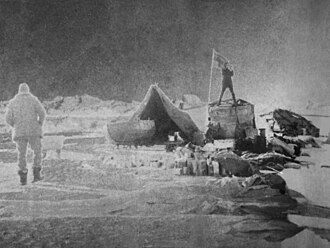
Andrée, Strindberg, and Frænkel tried to cross the drifting sea ice with sledges, supplies, scientific equipment, and their remaining hope. They kept records. They took photographs. They moved across a world that was not really land and not really sea, but shifting ice under a gray Arctic sky.
Then they disappeared.
For 33 years, nobody knew their final fate. Search efforts failed. Rumors spread. False clues appeared. Then, in 1930, a Norwegian sealing vessel reached Kvitøya, also known as White Island. There, searchers found the remains of the expedition’s final camp, along with bodies, diaries, equipment, and undeveloped photographs.
The discovery answered the question of where they ended up. It did not fully answer why they died.
Why It Matters
The Andrée Expedition matters because it is a real-life vanished expedition with its own evidence preserved in the ice. This was not just a rumor. Their camp was found. Their photographs survived. Their notes survived. The Arctic kept the file cold until someone finally walked into it.
But the cause of death remains debated. Exposure, exhaustion, starvation, illness, contaminated food, carbon monoxide, polar bear meat, and trichinosis have all been discussed in different explanations. The men survived the balloon crash. They survived weeks on the ice. Then, after reaching land, they died.
That is the part that keeps the case haunting.
They made it to an island. They had supplies. They had records. They had enough control left to make camp. And then something took the last of them.
T Funk Take
The Andrée Balloon Expedition feels like a warning about confidence. There is something very human about looking at the Arctic Ocean and saying, “What if we flew over it in a balloon?”
This sounds like a grim way to spend your final days. Also the risk that you took and failed and it cost you your life. That was probably on their minds from the moment the balloon started to fall.
The strangest part is not that the balloon failed. That almost feels expected. The strange part is that the men lived after the failure, marched across the ice, reached land, and still vanished from the world for 33 years.
Their own photographs came back like messages from a ghost expedition.
Until the Arctic tells us exactly what happened in that final camp, this one stays frozen in the archive.
Sources & Further Reading
-
The Andrée Diaries
Smithsonian Libraries and Archives
View Source -
The Final Diary Entries by Polar Adventurer Andrée
Karolinska Institutet
View Source -
The Lost Message of Nils Strindberg: Re-examining an 1897 Andrée Balloon Expedition Mystery
Polar Record / Cambridge University Press
View Source