
Official Archive Record
Case File CF-0070
The Unusual Cemeteries of Paris
Also known as: Paris Cemeteries, Père Lachaise Cemetery, Montmartre Cemetery, Montparnasse Cemetery, Paris Catacombs, Cimetière du Père-Lachaise, Cimetière de Montmartre, Cimetière du Montparnasse
Paris is one of the most beautiful cities in the world, but some of its most interesting streets belong to the dead.
The city’s cemeteries are not just burial grounds. They are outdoor museums, sculpture gardens, pilgrimage sites, historical archives, and quiet neighborhoods where the living walk among names that shaped art, politics, music, literature, and war.
What Happened
Paris did not become famous for its cemeteries by accident.
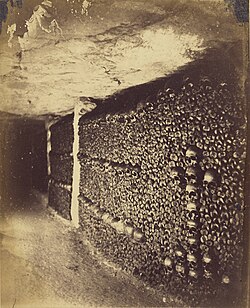
For centuries, the dead were buried inside crowded city spaces. Eventually, old burial grounds became a public health problem. The most famous example was the Cemetery of the Innocents, whose overcrowded remains helped lead to the creation of the Paris Catacombs. The first major transfers of bones into the underground ossuary began in the late 1700s, and the site was officially consecrated as the Paris Municipal Ossuary in 1786.
Above ground, the city also created major cemeteries outside the older urban core. Père Lachaise opened in 1804. Montparnasse followed in 1824. Montmartre followed in 1825. These places became more than practical burial sites. They became mapped landscapes of memory.
Père Lachaise is probably the most famous. Visitors come to find graves connected to writers, musicians, artists, revolutionaries, and public figures. Montmartre sits beneath the shadow of an artistic neighborhood and is known for its unusual setting under a bridge. Montparnasse became the resting place of intellectuals, artists, and cultural figures, with tombs and monuments that often feel more like personal statements than simple markers.
Then there are the Catacombs.
The Catacombs are not a cemetery in the normal sense. They are an underground ossuary, holding bones moved from former Paris cemeteries. Their famous entrance inscription warns visitors to stop because they are entering the empire of death. That is not subtle. Paris looked at a massive burial problem and turned it into one of the most haunting underground historical sites in Europe.
Why It Matters
The unusual cemeteries of Paris matter because they show how a city remembers itself.
A cemetery can be a practical place. A body goes in the ground. A name goes on a stone. But Paris turned cemeteries into cultural maps. You can walk through them and see who a society remembers, who it mourns, who it celebrates, and who it turns into legend.
They also show how death changes with the city around it. Paris had to move bones underground, build new burial spaces, and make room for the dead while the living city kept expanding. That created a strange double city: one Paris of cafés, lights, museums, and traffic, and another Paris of tombs, ossuaries, sculptures, and names.
The result is not just spooky. It is human.
Paris cemeteries are reminders that even the most romantic city in the world is built on layers of mortality.
T Funk Take
The unusual cemeteries of Paris are interesting because they do not hide death from the city. They organize it, sculpt it, label it, stack it underground, and turn it into part of the walk.
I have always had this point of view about the French: they make beautiful things. Art, food, music, architecture, even the way memory is preserved. As an American, I am used to newer places, open spaces, and a limited amount of visible history compared to Europe.
In a place like France, it seems like you are constantly reminded of the great people who came before you. You compare yourself to that history, and I imagine it pushes people to do things with a little more care, style, and permanence.
So it seems practical to me that they would preserve the memory of the dead this way. They turned cemeteries, tombs, monuments, and even stacked bones underground into something people travel from around the world to see.
That should feel morbid.
But somehow, it is still beautiful.
Until the City of Light runs out of shadows, the dead of Paris stay in the archive.
Sources & Further Reading
-
Cemeteries
City of Paris
View Source -
History
Catacombes de Paris — Official Website
View Source -
Self-guided or guided tours of cemeteries
Paris je t’aime — Office de Tourisme
View Source