Official Archive Record
Case File CF-0057
The Skunk Ape: Florida’s Swamp Bigfoot
Also known as: Florida Skunk Ape, Swamp Ape, Florida Bigfoot, Skunk Ape of the Everglades
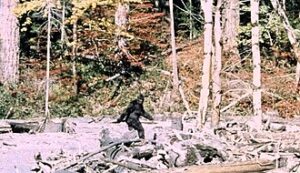
Every region gets the monster it deserves, and Florida ended up with a swamp ape that smells terrible.
The Skunk Ape is one of the most famous regional cryptids in the United States. It is often described as a large, hairy, upright creature living in the wetlands and remote backcountry of Florida, especially in places like the Everglades and Big Cypress.
What Happened
Reports of the Skunk Ape usually describe a tall, ape-like figure covered in reddish-brown or dark hair, walking on two legs, and giving off a powerful foul odor. That smell is one of the creature’s defining traits and the reason the name “Skunk Ape” stuck.
Witnesses have reported seeing the creature crossing roads, moving through palmetto scrub, standing near canals, or slipping through swampy areas where visibility is poor and sound carries strangely. Some sightings describe glowing eyes or strange vocalizations, while others sound more like a classic Bigfoot encounter moved into subtropical terrain.
Florida’s landscape helps the legend survive. Swamps, dense vegetation, alligators, heat haze, bugs, and long stretches of remote land create the perfect stage for misidentification and mystery. A person can see something moving through reeds or tree cover and never get a second look.
One of the better-known modern chapters in the Skunk Ape story is the “Myakka Skunk Ape” photographs from 2000, in which an anonymous woman mailed photos and a letter to the Sarasota Sheriff’s Office claiming a strange creature had been near her home. The pictures became famous, but like most cryptid evidence, they solved nothing.
Why It Matters
The Skunk Ape matters because it is a great example of how local environment shapes a legend. Bigfoot belongs to the forests of the Pacific Northwest. The Skunk Ape belongs to humidity, mud, and standing water.
It also shows how a cryptid can sit between folklore and wildlife misidentification. Florida has bears, escaped exotic animals, large wading birds, and enough weird human behavior to complicate any story. Add darkness, distance, and swamp conditions, and almost anything can start to look legendary.
Still, the Skunk Ape survives because people keep reporting something. Whether it is a misidentified animal, a regional version of Bigfoot, or just Florida refusing to act normal, the file stays open.
T Funk Take
The Skunk Ape is interesting to me because, if it were real, it would suggest there is not just one large unknown primate. There may be at least two regional versions with different characteristics. That actually lines up more with nature. Animals adapt to their environment.
A creature living in a hot, wet, tropical swamp would not be expected to look, move, or smell exactly like one living in colder forests or mountain regions. Environmental adaptation comes with trade-offs. In this case, one of those trade-offs might be odor.
The smell is one of the details that makes the Skunk Ape stand out. But I do not think the smell automatically makes the story ridiculous. If this were an undiscovered primate, living in humidity, mud, standing water, and dense vegetation, it probably would not smell pleasant.
The closest comparison I can think of is visiting the gorilla area at a zoo on a hot summer day. Before you even see them, you can sometimes smell that you are getting closer. That does not mean anything supernatural is happening. It means large animals have a presence, and smell is part of that.
Several Sasquatch encounters also describe a foul odor. Perhaps that detail is not random. Perhaps it is part of the larger “wild primate” description people keep reporting, whether the explanation is a real animal, misidentification, or folklore repeating itself.
Until the palmettos part and the smell hits first, the Skunk Ape stays in the archive.
Sources & Further Reading
-
Florida Black Bear
Florida Fish and Wildlife Conservation Commission
View Source -
Mammals of Florida
Florida Museum of Natural History
View Source -
Why Bigfoot and the Abominable Snowman Loom Large in the Human Imagination
Smithsonian Magazine
View Source