
Official Archive Record
Case File CF-0122
The Bell Witch: Tennessee’s Most Famous Haunting
Also known as: Bell Witch, Bell Witch Haunting, Bell Witch of Tennessee
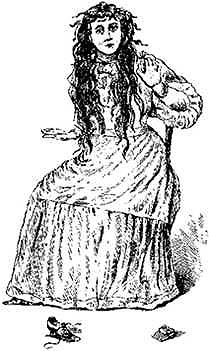
The story begins on a farm along the Red River in Robertson County, Tennessee, where John Bell and his family settled during the early nineteenth century. According to the legend, strange disturbances began around 1817 and gradually escalated from unexplained animals and noises into physical attacks, disembodied voices and an invisible presence that seemed particularly interested in John Bell and his daughter Betsy. The entity eventually became known as the Bell Witch, creating one of the most enduring supernatural legends in the American South.
There is one major problem with the story: the detailed version most people know was not written down while the haunting was supposedly happening. The Bell family was real, John Bell really lived in Robertson County and he really died there in 1820, but the surviving supernatural narrative was assembled largely from accounts published many decades later. That gap between an extraordinary legend and a surprisingly thin contemporary paper trail is what makes the Bell Witch case so interesting.
The Bell Family Comes to Tennessee
John Bell was born in North Carolina in 1750 and married Lucy Williams in 1782. In 1804, the family moved west and established a large farm along the Red River in Robertson County, near what is now Adams, Tennessee. Bell became a prosperous farmer and member of the local community, raising a large family on property that would eventually become permanently associated with the supernatural story bearing his name.
The events later attributed to the Bell Witch are usually dated from approximately 1817 through 1821. According to later accounts, the first unusual incident occurred when John Bell encountered a strange animal in one of his fields, sometimes described as resembling a dog with unusual features. Bell reportedly fired at it, but the creature disappeared without leaving a body or other physical evidence.
Something Enters the House
The legend says the strange activity soon moved inside the Bell home. Family members reportedly heard scratching, knocking, gnawing sounds and what seemed like chains moving across the floors or walls. Bedding was supposedly pulled from sleeping children, while some members of the family claimed they were pinched, slapped or had their hair pulled by something they could not see.
Betsy Bell became one of the central figures in the story. According to the later narrative, the disturbances followed her even when she stayed with neighbors, and the invisible presence frequently attacked or tormented her. John Bell also became a primary target, eventually suffering physical problems that the family would later connect with the entity.
Then the Witch Started Talking
The most unusual development was the appearance of a voice. Later accounts claimed that faint whispers eventually became strong enough for the entity to hold conversations with family members and visitors. The voice supposedly answered questions, repeated sermons, argued with people and demonstrated knowledge of events happening elsewhere in the community.
That transformed the story from an ordinary haunting into something much stranger. A knocking sound can come from a house, an animal or someone playing a prank, but an invisible voice capable of carrying on conversations required a much more complicated explanation. Some people suspected ventriloquism or deliberate deception even within the later accounts, while believers treated the voice as evidence that something intelligent was interacting with the family.
Was the Witch Really Kate Batts?
The spirit eventually became closely associated with a woman named Kate Batts, and the Bell Witch is often simply called “Old Kate.” The familiar version of the story says Batts had been cheated or wronged by John Bell and vowed revenge against him, supposedly returning in supernatural form to torment his family. The historical record does not support that story nearly as cleanly as the folklore suggests.
The Tennessee State Library and Archives notes that a dispute involving the Bell family and the Batts family appears to have become confused over time. Kate Batts actually outlived John Bell, which directly conflicts with versions claiming that she cursed him from her deathbed before returning as the witch. Her association with the entity therefore appears to be part of the developing legend rather than a securely documented explanation for the original events.
The Andrew Jackson Story
One of the most famous Bell Witch stories involves Andrew Jackson, who lived in Tennessee and would later become president of the United States. According to the legend preserved in Martin Van Buren Ingram’s 1894 account, Jackson traveled with several men to investigate the haunting. Their wagon supposedly stopped mysteriously on the road near the Bell property until an unseen voice allowed the group to continue.
The story goes on to describe one of Jackson’s companions boasting that he could expose the witch, only to be attacked or humiliated by the entity. Jackson supposedly remained fascinated by the experience, but there is no known contemporary record from Jackson documenting such a visit. The story appears prominently in Ingram’s book decades later, which means it should be treated as part of the Bell Witch tradition rather than established presidential history.
The Death of John Bell
John Bell’s health deteriorated during the later period of the supposed haunting. He developed physical symptoms that included episodes of weakness and difficulty speaking or swallowing, and he died on December 20, 1820. Later Bell Witch accounts claimed that a mysterious vial of dark liquid was discovered in the house and that the entity announced it had poisoned Bell.
The family supposedly tested the liquid on an animal before destroying it, but no surviving specimen exists and there was no modern medical examination capable of establishing what caused Bell’s illness or death. The claim that the Bell Witch killed him therefore comes from the legend rather than contemporary medical evidence. His actual death is documented; supernatural murder is not.
The Haunting Ends
According to the traditional account, the activity decreased sharply after John Bell died. The entity supposedly remained around the household for several months before announcing that it was leaving, although later stories claimed it returned briefly in 1828. Nothing approaching the intensity of the original legend has been documented within the Bell family since.
The story itself did not disappear. Instead, it became part of Robertson County folklore, passed through families and local tradition until versions began entering published histories. By the late nineteenth century, the Bell Witch had grown from a regional ghost story into something writers could present as a major unexplained event.
The Missing Paper Trail
This is where the case becomes much more difficult. There are no known surviving records written during the alleged 1817–1821 haunting that document the Bell Witch in anything close to the detailed form later described. An 1886 history of Tennessee included a brief account of the Bell Witch tradition, but the first comprehensive treatment was Martin Van Buren Ingram’s An Authenticated History of the Famous Bell Witch, published in 1894.
Ingram claimed to have access to a manuscript called Our Family Trouble, supposedly written in 1846 by John Bell’s son Richard Williams Bell. Much of Ingram’s narrative depends on that document, but the original manuscript has never surfaced for independent examination. That leaves historians unable to determine how closely Ingram’s printed version represents an authentic family document and how much may have been reconstructed, embellished or added during decades of storytelling.
Could Betsy Have Been Behind It?
One skeptical explanation proposed over the years is that Betsy Bell or someone close to her created at least some of the phenomena through ventriloquism, tricks or other deception. The later account itself records suspicions of ventriloquism because the mysterious voice was frequently associated with Betsy’s presence. A clever person in a dark frontier house could potentially create noises, move objects or produce voices that would be extremely difficult to locate.
That explanation has its own problems because the legend eventually includes phenomena reported by numerous visitors and incidents supposedly occurring away from Betsy. The larger issue is that the accounts describing those events were recorded so long afterward that reconstructing exactly who witnessed what is nearly impossible. Ventriloquism is therefore a hypothesis rather than a proven solution, just as a supernatural entity remains an unproven explanation.
The Bell Witch Cave
Today one of the most famous locations associated with the legend is the Bell Witch Cave on land that once belonged to the Bell family. The cave is real and was added to the National Register of Historic Places in 2008, largely because of its importance to the development of tourism surrounding the Bell Witch story. It remains one of the principal locations visited by people interested in the legend.
The cave should not be treated as the location where the original haunting occurred. Tennessee archival material describes it as having only a relatively minor role in the older Bell Witch tradition, while the primary haunting supposedly centered on the Bell home. Over time, the surviving cave became a convenient physical location where a story attached to a demolished farmhouse could continue living.
From Family Story to Tennessee Legend
The Bell Witch eventually became much larger than the Bell family. Books, radio programs, documentaries, plays, films and ghost tours repeatedly retold the story, with each generation emphasizing different pieces. The Library of Congress even preserves a 1941 radio dramatization of the legend, demonstrating how thoroughly the Bell Witch had entered American popular folklore by the twentieth century.
That process also makes the original events increasingly difficult to recover. A story repeated for two centuries accumulates memorable dialogue, dramatic scenes and explanations that can eventually look like historical facts. The Bell Witch may therefore be one of Tennessee’s best ghost stories while still being one of its hardest historical mysteries to reconstruct.
Why It Matters
The Bell Witch illustrates the difference between documenting folklore and documenting the supernatural. We can establish that the Bell family existed, that John Bell died in 1820, that the legend became deeply embedded in Tennessee culture and that nineteenth-century writers recorded stories about an invisible entity tormenting the family. What we cannot establish from the surviving evidence is that an independent supernatural being actually produced those events.
The missing contemporary record is therefore not a minor problem; it is central to the case. Most of the spectacular details come through sources written long after the supposed witnesses experienced them, while the foundational family manuscript has never been independently examined. That does not prove nothing happened at the Bell farm, but it makes separating a real family disturbance from two centuries of Tennessee folklore extremely difficult.
T Funk Take
This is probably one of the best ghost stories we’ve got in Tennessee, and I completely understand why it survived. You’ve got an invisible voice, a teenage girl getting attacked, a father supposedly poisoned by a ghost, Andrew Jackson showing up and a cave still sitting there that you can actually visit. If you’re building a legend, that’s a pretty solid lineup.
The part that bothers me is the timeline of the evidence. If this thing was talking to crowds of people, beating family members and supposedly attracting Andrew Jackson, I would really like something written while it was happening. Instead, the story gets much clearer and more detailed the farther we get from 1817, which is usually the opposite of what I want when I’m trying to figure out what actually happened.
The Kate Batts part is a perfect example. The story works great if an angry woman curses John Bell and comes back after death to ruin his life, except she apparently didn’t die before John Bell. Once that happens, I have to start wondering how many other pieces became attached because they made the story better rather than because somebody documented them at the time.
That doesn’t mean I think the Bell family necessarily made everything up. Something could have been happening in that house, and after two hundred years we may never know whether it involved pranks, family conflict, illness, ventriloquism, superstition, genuine unexplained experiences or several of those things happening together. What I don’t think we have is enough evidence to jump from “something strange may have happened” to “an invisible witch murdered John Bell.”
I still want this one in the archive because folklore this durable becomes history of its own. Whatever happened on that farm, Tennessee has been telling the story for generations, and people are still driving to Adams hoping the witch hasn’t completely moved out. For the supernatural claim I’m skeptical, but as a Tennessee legend the Bell Witch absolutely earns its place in the T Funk Era archive.
Sources & Further Reading
-
Tennessee Myths and Legends: Bell Witch
Tennessee State Library and Archives
View Source -
Bewitched in Tennessee
North Carolina Department of Natural and Cultural Resources
View Source -
An Authenticated History of the Famous Bell Witch
M. V. Ingram / W. P. Titus, 1894 — HathiTrust Digital Library
View Source