Official Archive Record
Case File CF-0118
Werewolves: When Europe Put Men on Trial for Becoming Wolves
Also known as: Werewolf, Lycanthrope, Wolf-Man, Loup-Garou
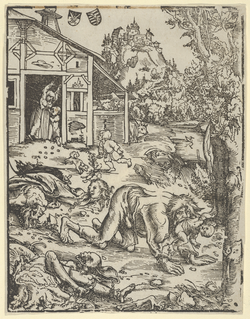
The modern werewolf has a familiar set of rules. A human is bitten, the full moon rises, bones twist, hair appears and the victim becomes a creature that can only be stopped with silver. That monster is so recognizable that it feels ancient, but much of the version we know today was assembled from older folklore, early-modern criminal trials and much later fiction.
The older European werewolf could be something very different. Some people were believed to transform voluntarily through magic, enchanted belts, animal skins or agreements with the Devil, while others were cursed or changed against their will. During the fifteenth, sixteenth and seventeenth centuries, those beliefs became serious enough that actual people were arrested, interrogated and sometimes executed for supposedly becoming wolves.
Before the Werewolf Trials
Stories about humans becoming wolves existed long before European courts began prosecuting supposed werewolves. Greek mythology included the story of Lycaon, a king transformed into a wolf after offending Zeus, and his name eventually became associated with the word lycanthropy. Northern European traditions also included warriors, sorcerers and other figures who could take on animal forms or wear skins associated with wolves.
These older stories were not all describing the same creature. Sometimes transformation was punishment, sometimes magic, sometimes a temporary condition and sometimes a sign that a person had crossed the boundary between human and animal. The idea was broad enough to survive changes in religion and culture while taking on new meanings.
As Christianity became dominant in medieval Europe, shape-shifting traditions increasingly became entangled with ideas about witchcraft and the Devil. A person who claimed to become a wolf might no longer be treated simply as a figure from folklore. Authorities could interpret the transformation as evidence of sorcery, a demonic pact or an attack on Christian society.
When Werewolves Went to Court
By the early modern period, werewolf accusations appeared alongside the wider European witch hunts. Courts in parts of Switzerland, France, Germany and surrounding regions prosecuted people accused of transforming into wolves, attacking livestock and murdering human beings. A University of London study of Franche-Comté alone examined proceedings involving thirty-six people accused of werewolf-related offenses between 1521 and 1664.
Real wolves made the accusations easier to imagine. Rural communities regularly lost animals to predators, and wolves could also attack people under extreme conditions. When livestock disappeared or children were killed, a community that already believed humans could use sorcery to become wolves had a supernatural suspect available.
The prosecutions also occurred during periods of religious conflict, poverty, war and social instability. Accused werewolves could be outsiders, poor people or individuals already suspected of other crimes, while confessions were sometimes produced under torture. That makes it extremely difficult to separate actual violence, false accusations, coerced confessions and supernatural belief centuries later.
Gilles Garnier
One of the most famous cases occurred in France during the 1570s. Gilles Garnier was a poor man living near Dole who was accused after children in the surrounding area were attacked and killed. Authorities claimed Garnier had been seen near victims and eventually accused him of committing the murders while transformed into a wolf.
Under interrogation, Garnier confessed to killing children and claimed that a mysterious figure had given him an ointment that allowed him to assume wolf form. His confession fit a pattern increasingly familiar in witchcraft and werewolf proceedings, where magical ointments, demonic figures and transformations were used to explain crimes that might otherwise have been treated as ordinary murder.
Garnier was convicted and executed in 1573. The case is historically real, but his execution does not establish that he physically became a wolf. It establishes that a sixteenth-century court considered supernatural transformation a possible explanation for violent crime.
Peter Stumpp and the Werewolf of Bedburg
An even more infamous case appeared in Bedburg, near Cologne, in 1589. Peter Stumpp, whose name appears in several different spellings, was accused of murder, cannibalism, sorcery and transforming into a wolf. A widely circulated pamphlet published shortly afterward described him as having terrorized the surrounding countryside for years.
According to the account, Stumpp claimed the Devil had given him a magical belt that allowed him to take the form of a powerful wolf. He supposedly committed numerous murders while transformed and returned to human form when the belt was removed. No magical belt was ever produced, and Stumpp’s confession was obtained in the context of torture, making the most sensational portions of the story impossible to treat as reliable evidence.
His execution on October 31, 1589, was deliberately brutal and public. Contemporary and later accounts describe him being tortured on a wheel, beheaded and burned, after which authorities displayed his head and an image of a wolf as a warning. The case became one of Europe’s most famous werewolf prosecutions and was spread through printed pamphlets and illustrations.
Did They Actually Believe They Became Wolves?
Not every person accused of being a werewolf necessarily made the same claim. Some denied everything, some confessed after torture and others appear to have genuinely believed they experienced some form of transformation. Early-modern physicians and scholars debated whether a human body could actually change into an animal or whether the experience was an illusion.
One explanation was a condition commonly described as lycanthropy, in which a person believed that he or she had become a wolf. Medical writers could interpret that belief as a form of melancholy or mental disturbance rather than an actual physical transformation. Religious authorities could accept the illusion while still blaming the Devil for creating it.
That distinction mattered. A court did not necessarily need to believe that human bones physically rearranged themselves into the skeleton of a wolf to condemn someone. Believing that the Devil had caused a person to think and behave like a wolf could still place the accused within the same world of witchcraft and demonic influence.
The Wolf Was Already Terrifying
It is difficult to separate werewolf folklore from Europe’s historical relationship with real wolves. Wolves competed with people for livestock, lived around forests and agricultural settlements and occasionally attacked humans. A predator already capable of frightening a village did not require much imagination to become the animal form of a dangerous human being.
The wolf also carried symbolic meaning. It could represent wilderness, hunger, violence and the loss of ordinary human restraint. Turning a murderer into a wolf therefore provided a powerful explanation for behavior people considered almost impossible for a normal human being to commit.
That idea survives in modern language even after belief in literal transformation faded. Calling someone a beast or describing a violent person as animalistic still separates extreme behavior from what society considers properly human. The werewolf made that metaphor physical.
The Trials Fade Away
Werewolf prosecutions declined as European courts and educated elites became increasingly skeptical of literal witchcraft and supernatural transformation. By the late seventeenth and eighteenth centuries, the belief had not disappeared from folklore, but it became much more difficult to turn an accusation of lycanthropy into a criminal prosecution.
Some courts had already shown skepticism during the height of the phenomenon. Historical research into Franche-Comté found instances in which judges ignored werewolf accusations or acquitted defendants because the evidence was insufficient. Even societies deeply familiar with werewolf beliefs did not automatically accept every accusation.
Eventually the werewolf moved primarily out of the courtroom and back into storytelling. That transition probably saved people from being executed for supposedly changing into wolves, but it also allowed writers to reshape the creature without being constrained by old legal or religious traditions.
Where Did the Full Moon Come From?
The full moon is now almost inseparable from werewolves, but it was not a universal rule in older European folklore. Early traditions included transformation through magic belts, wolf skins, ointments, curses, demonic assistance and voluntary shape-shifting. A werewolf did not necessarily need to wait for a particular night of the lunar cycle.
The familiar full-moon transformation became much more standardized through modern fiction and especially twentieth-century film. Once movies established a clear visual rule that audiences could immediately understand, the moon became part of the monster’s basic identity. Today it is difficult to imagine a werewolf transformation without it even though many older werewolf traditions worked differently.
The same thing happened with the idea that a werewolf curse spreads through a bite. Modern audiences often treat that rule like ancient folklore, but older traditions frequently explained werewolves through magic, curses, witchcraft or deliberate transformation instead. Fiction gradually turned lycanthropy into something resembling a supernatural infection.
What About Silver Bullets?
Silver also became one of the werewolf’s most famous weaknesses. Folklore did contain traditions in which silver or specially prepared bullets could defeat witches, supernatural beings or creatures believed resistant to ordinary weapons. Library of Congress folklore material records the idea of silver or blessed bullets being particularly effective against werewolves and other magically protected targets.
The specific modern rule that a werewolf can only be killed with silver became much more rigid through popular entertainment. Like the full moon, it gave storytellers a simple rule audiences could remember. Ordinary weapons fail, silver works, and suddenly the monster has both extraordinary power and one convenient weakness.
These rules help demonstrate how folklore evolves. A detail found in some traditions can become universal after books, radio, movies and television repeat it enough times. Eventually the newer version can become more familiar than the folklore that inspired it.
Werewolves and Hollywood
By the twentieth century, the werewolf had become primarily a horror character rather than a criminal accusation. Films such as The Wolf Man helped establish the tragic modern version of the creature: an ordinary person infected or cursed against his will who loses control when the transformation begins. That version shifted sympathy toward the human trapped inside the monster.
The transformation itself also became the center of the story. Earlier courts worried about whether a person had used magic to commit crimes as a wolf, while modern films could show the audience the change happening directly. Makeup effects, moonlight and cinematic transformations turned an old supernatural belief into an ideal movie monster.
Hollywood did not invent the werewolf, but it organized centuries of inconsistent folklore into a creature with recognizable rules. Full moon, bite, transformation, silver and loss of control became a package. That package is largely what we mean today when we say werewolf.
Why It Matters
The history of werewolves is darker than the monster movies suggest because real people died over these beliefs. European courts genuinely prosecuted individuals accused of becoming wolves, and some were tortured and executed after confessions that mixed violent crime with witchcraft and supernatural transformation. The werewolf was not merely a Halloween costume to the communities conducting those trials.
At the same time, the historical prosecutions do not provide evidence that physical transformations actually occurred. They reveal how people interpreted violence, predators, mental illness, religious fears and unexplained events within the worldview available to them. A wolf-man was one possible answer in a society where witchcraft and demonic intervention could still be treated as legal realities.
The modern werewolf is therefore several creatures layered together. Ancient transformation myths, real wolves, witch trials, psychiatric ideas, folklore and Hollywood all contributed pieces. The monster survived because every era found a new way to use it.
T Funk Take
I knew werewolves were old folklore, but the part that gets me is that governments actually put people on trial for this. We’re not talking about somebody telling a scary story around a fire. Courts were interrogating people about magical belts and wolf transformations and then sometimes executing them because they thought some version of that story might actually be true.
Peter Stumpp is a perfect example of why I would be extremely careful with the historical record. Maybe he committed terrible crimes, maybe some of the accusations were true and some were exaggerated, or maybe the entire story was shaped by torture, politics and panic. What I definitely don’t think happened is the Devil handed him a magic belt that turned him into a wolf, especially since nobody ever produced the belt.
I also didn’t realize how much of the werewolf I picture in my head comes from movies. Full moon, getting bitten, turning into a monster and needing a silver bullet to stop it feels like ancient mythology because we’ve heard it our whole lives. In reality, the older stories were all over the place, and Hollywood basically came along and wrote the standardized operating manual.
The real wolves probably deserve part of the credit too. If you live in a world where wolves actually kill livestock and occasionally attack people, turning the wolf into the face of everything violent and uncontrollable makes a lot more sense. Add religion, fear, unexplained murders and a justice system willing to accept supernatural explanations, and suddenly a monster story can become a death sentence.
I don’t think people physically transformed into wolves, but I absolutely believe people were terrified enough of werewolves to ruin and end real human lives. That makes the history much more interesting to me than the full moon version, because the monster may not have been real while the consequences definitely were. That is enough to keep the werewolf in the T Funk Era archive.
Sources & Further Reading
-
Before America Had Witch Trials, Europe Had Werewolf Trials
HISTORY
View Source -
Trials of Werewolves in the Franche-Comté in the Early Modern Period
University of London / British Library EThOS
View Source -
Flesh and Death in Early Modern Bedburg
Cambridge University Press / Boydell & Brewer
View Source