
Official Archive Record
Case File CF-0116
Charlie Wilson’s War: The Congressman Who Supercharged America’s Covert War in Afghanistan
Also known as: Charlie Wilson's War, Operation Cyclone, Afghan Covert Aid Program
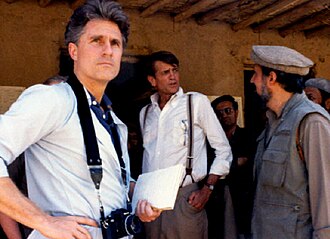
In December 1979, the Soviet Union sent troops into Afghanistan and became trapped in a war against an armed resistance spread across some of the most difficult terrain on Earth. The United States decided to help that resistance without openly entering the conflict, creating a covert pipeline of money, weapons and intelligence that would become one of the largest secret operations of the Cold War. Presidents, intelligence agencies, foreign governments and Afghan fighters all played major roles, but one Texas congressman became unusually important in determining how much money Washington was willing to spend.
His name was Charlie Wilson. He did not command troops, run the CIA or serve as president, yet his position on a House appropriations subcommittee gave him access to something every covert operation eventually needs: money. Wilson used that position aggressively, pushing funds into the Afghan program even when the CIA and Pentagon had not requested them. The result was a remarkable example of how a single determined member of Congress could influence a secret war thousands of miles away.
The Soviet Invasion
Afghanistan had already been unstable before Soviet troops entered the country in force at the end of 1979. A communist government aligned with Moscow faced a growing insurgency, while Soviet advisers were increasingly involved in supporting the regime. When the Soviet Union intervened militarily in December, the conflict became a major Cold War confrontation.
The Carter administration responded with sanctions and diplomatic pressure, but it also expanded an existing covert effort inside Afghanistan. A presidential finding authorized the CIA to provide lethal assistance to Afghan insurgents, commonly called the mujahideen. To conceal direct American involvement, Soviet-designed weapons could be acquired from countries including Egypt and China and moved toward Afghanistan through Pakistan.
The Covert Pipeline
The structure of the operation was deliberately indirect. American weapons and money did not simply leave Washington and arrive at an Afghan guerrilla camp with U.S. markings still attached. Pakistan became the critical middleman, with its intelligence service helping determine how weapons and support moved to the resistance.
Saudi Arabia also became an important financial partner and matched substantial portions of American funding. This arrangement allowed the United States to make the Soviet occupation more expensive without deploying American combat forces against Soviet troops. It also meant that Washington did not have complete control over which Afghan factions ultimately received the assistance.
Enter Charlie Wilson
Charles Wilson was a Democratic congressman from East Texas who had served in the House since 1973. He had graduated from the U.S. Naval Academy and served in the Navy before entering politics, but nothing about his formal position suggested that he should become one of the most influential Americans involved in Afghanistan. He was not running the CIA and was not initially a member of the House intelligence committee overseeing the covert operation.
What Wilson did have was a seat on the defense subcommittee of the House Appropriations Committee. That committee controlled funding for the CIA, giving Wilson leverage over the one resource that could rapidly change the scale of the operation. After visiting Pakistan and learning more about conditions faced by the Afghan resistance, he concluded that Washington was not providing enough assistance.
The Power of the Purse
By 1984, the covert Afghan program was receiving approximately $60 million a year in American funding, with Saudi Arabia matching the amount. Wilson believed that was nowhere near enough. He wanted the mujahideen to receive more effective antiaircraft weapons capable of challenging Soviet helicopters and aircraft that could attack guerrilla positions with relative freedom.
Wilson used his position on the appropriations subcommittee to add another $40 million to the program, most of it intended for Swiss-made Oerlikon antiaircraft guns. The remarkable part is that the administration had not requested the additional money. CIA’s own historical account says the Pentagon objected because the funds had to be taken from somewhere else in the defense budget, and Wilson responded by threatening additional cuts until the Pentagon backed down.
The CIA had reservations as well. Agency officials argued that the Oerlikon guns would be difficult to move and maintain in Afghanistan and were not necessarily the weapon the resistance needed. Wilson nevertheless succeeded in getting the additional appropriation through, forcing the intelligence committees to return and authorize money beyond the amount originally requested.
How One Congressman Could Do That
This is the part of the story that makes Wilson unusual. He did not possess unilateral authority to launch a war or order the CIA to conduct an operation, but congressional control over appropriations gave him enormous influence over what the CIA could afford to do. Covert programs still required money, and much of that money passed through a relatively small number of members who dealt with classified defense and intelligence budgets.
Wilson learned how to operate inside that system. Instead of standing on the House floor publicly demanding a giant Afghan weapons package, he worked through classified appropriations and personal relationships. A member of Congress who understood the budget process could therefore change a secret war without most Americans ever seeing a public vote describing exactly what was being funded.
The Program Gets Much Bigger
Wilson was not the only person pushing for escalation. CIA Director William Casey increasingly believed the United States had an opportunity to impose much greater costs on the Soviet Union, and the Reagan administration became more willing to expand the program. By the fall of 1984, Casey was discussing a major increase with Saudi officials.
The U.S. contribution was raised to approximately $250 million for 1985, several times the previous level. The objective was also becoming more ambitious. What had initially been an effort to sustain resistance against Soviet occupation increasingly became an effort to help force the Soviets out.
The Stinger Missile
Soviet air power remained one of the greatest advantages facing the Afghan resistance. Helicopters, particularly heavily armed gunships, could strike fighters and villages while operating beyond the reach of many weapons available to the mujahideen. By 1985, Washington was seriously considering giving the resistance the American-made FIM-92 Stinger, a portable surface-to-air missile capable of engaging low-flying aircraft.
The decision was controversial because supplying an unmistakably American weapon made plausible deniability much more difficult. CIA officials also worried about Soviet retaliation and about what might happen to advanced missiles that disappeared from the battlefield. In March 1986, President Ronald Reagan approved supplying Stingers on the recommendation of CIA Director Casey.
The missiles had a significant battlefield effect and forced Soviet pilots to change the way they operated. Their appearance has become one of the most recognizable parts of the Afghan covert-war story, but it is important not to turn Wilson into the sole person who made the decision. Congress supported escalation, Wilson pushed aggressively for better antiaircraft capability, Casey advocated expansion and Reagan ultimately approved the Stingers.
One Man, But Not Alone
Calling the conflict “Charlie Wilson’s War” makes for a great title, but taken literally it gives Wilson too much credit. The covert effort had begun under President Jimmy Carter before Wilson became its most famous congressional advocate. Reagan, Casey, intelligence committees, appropriators, Saudi officials, Pakistani leaders and CIA officers all influenced how the program developed.
Pakistan was particularly important because American aid moved through Pakistani channels before reaching Afghan groups. Saudi money expanded the available resources, while fighters inside Afghanistan absorbed the casualties and carried out the war itself. Wilson could increase funding and use political pressure, but he could not personally determine everything that happened once weapons crossed the border.
That actually makes his role more interesting rather than less impressive. He found one point in an enormous international system where an individual congressman possessed unusual leverage and repeatedly pushed on it. His influence came from understanding exactly where political authority and money intersected.
The Soviets Leave
The Soviet Union eventually concluded that the Afghan war was costing too much for too little return. Moscow announced plans to withdraw in 1988, and the final Soviet troops left Afghanistan in February 1989. American aid was not the only reason for that decision, but outside support made the Afghan resistance much harder to defeat and raised the military and political cost of remaining in the country.
The mujahideen themselves deserve the central military credit because they fought the Soviet and Afghan government forces throughout the conflict. Geography, Soviet political changes under Mikhail Gorbachev, economic pressures inside the USSR and diplomatic negotiations also influenced the withdrawal. Wilson’s contribution was helping ensure that the resistance had more money and weapons available while those larger forces were working.
The War After the War
The Soviet withdrawal did not bring peace to Afghanistan. Competing Afghan factions continued fighting, the existing government eventually collapsed and the country entered another destructive civil war. The Taliban emerged during the 1990s from that environment and eventually took control of most of Afghanistan.
It is tempting to draw a straight line from Charlie Wilson’s appropriations to everything that later happened, including the Taliban and al-Qaeda, but history is more complicated than that. The Afghan resistance consisted of multiple factions, Pakistan made important decisions about where assistance went, and the political collapse after the Soviet withdrawal involved forces extending well beyond Wilson or the CIA. The covert program helped defeat one strategic problem without creating a stable political settlement afterward.
Why It Matters
Charlie Wilson’s role in Afghanistan shows how American power does not always operate in the way people imagine. A major foreign war can be influenced not only by presidents, generals and intelligence chiefs, but by members of Congress who understand appropriations and have access to classified budgets. Wilson found a place inside the machinery where one politician could move tens of millions of dollars without becoming the commander of anything.
It also shows why the phrase “secret government operation” does not necessarily mean an operation known only to the CIA. Covert action can involve presidents, congressional committees, foreign governments, intelligence services and contractors while still remaining largely hidden from the public. In Wilson’s case, the secrecy covered an operation that eventually helped arm one side of one of the defining proxy wars of the Cold War.
T Funk Take
What gets me about this case is that Charlie Wilson wasn’t the president and he wasn’t the director of the CIA. He was a congressman from Texas who figured out exactly which committee controlled the money and realized that if he could move the money, he could move the war. That is a ridiculous amount of influence for one person to have without most of the country even knowing what he was doing at the time.
The $40 million part is probably my favorite example. The CIA didn’t ask for it, the Pentagon didn’t want to give up the money and Wilson basically kept pushing until everybody figured out that fighting him over it was going to hurt worse than letting him have it. That tells me more about how Washington actually works than a lot of speeches about foreign policy ever could.
I wouldn’t say Charlie Wilson single-handedly defeated the Soviet Union in Afghanistan because that isn’t what happened. Afghans did the fighting and dying, Pakistan controlled much of the supply pipeline, Saudi Arabia put up money, the CIA ran the covert operation, Casey pushed expansion and Reagan made major decisions like approving the Stinger. Wilson’s real accomplishment was realizing how much leverage one congressman could have over all of them if he controlled part of the checkbook.
The ending also bothers me because winning one part of a war isn’t the same thing as figuring out what comes next. The Soviets left, but Afghanistan didn’t suddenly become stable, and the country spent years tearing itself apart afterward. That doesn’t erase what Wilson accomplished against the Soviet occupation, but it is a reminder that covert operations are much easier to start funding than countries are to put back together.
So I wouldn’t call this the story of one man secretly winning a war. I would call it the story of one man finding exactly where the American system gave him leverage and using it harder than almost anybody expected. That’s strange enough without exaggerating it, and it earns a place in the T Funk Era archive.
Sources & Further Reading
-
The Agency and the Hill: CIA's Relationship with Congress, 1946–2004
Central Intelligence Agency — Center for the Study of Intelligence
View Source -
Afghanistan Covert Action Program — Briefing Memorandum, May 9, 1980
U.S. Department of State — Office of the Historian
View Source -
Charles Wilson — Congressional Biography
U.S. House of Representatives — History, Art & Archives
View Source