Official Archive Record
Case File CF-0109
Aleister Crowley: The Great Beast, Magick and the “Wickedest Man in the World”
Also known as: Edward Alexander Crowley, The Great Beast 666, Master Therion, Baphomet
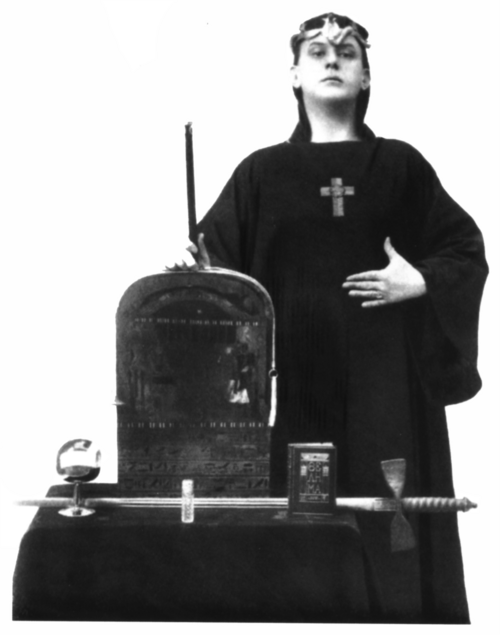
Aleister Crowley was born on October 12, 1875.
By the time he died in 1947, he had become one of the most notorious occult figures of the twentieth century. He called himself the Great Beast 666, practiced what he deliberately spelled “magick,” founded the religion of Thelema and cultivated a public image so provocative that newspapers eventually described him as the “Wickedest Man in the World.”
That reputation still follows him.
But Crowley was more complicated than the cartoon version of a black magician performing satanic rituals in a dark room. He was also a poet, author, chess player, world traveler and accomplished mountaineer who participated in some of the earliest attempts on the world’s highest mountains.
Separating the actual man from the character he created may be the strangest Crowley story of all.
Who Was Aleister Crowley?
Crowley was born Edward Alexander Crowley in Leamington Spa, England, into a prosperous and deeply religious Plymouth Brethren family.
His upbringing was intensely Christian. As he grew older, Crowley rebelled against the religion of his childhood and increasingly explored mysticism, ceremonial magic, Eastern religions and alternative systems of spirituality.
While studying at Trinity College, Cambridge, he began using the name Aleister.
By the end of the nineteenth century he had entered Britain’s occult community and became associated with the Hermetic Order of the Golden Dawn, an influential organization devoted to ceremonial magic and esoteric philosophy.
Crowley would eventually move far beyond the Golden Dawn.
He wanted his own system.
The Mountaineer Nobody Remembers
Before Crowley became internationally notorious for occultism, he was also a serious mountaineer.
In 1902 he joined Oscar Eckenstein and an international climbing party attempting K2, the second-highest mountain on Earth. It was the first serious expedition attempting to climb the mountain.
The expedition did not reach the summit, but the climbers explored the mountain and remained for extended periods at extremely high altitude under primitive conditions. The effort took place decades before anyone successfully climbed K2.
Crowley later led a 1905 expedition attempting Kangchenjunga, the world’s third-highest mountain.
That expedition ended disastrously when an avalanche killed one European climber and three local porters.
Crowley’s mountaineering career rarely receives the attention given to his occult activities, but it reveals something important about him.
He was willing to go to extremes long before anyone called him the Great Beast.
Cairo and The Book of the Law
The central event in Crowley’s spiritual life took place in Cairo in 1904.
Crowley and his wife Rose were traveling in Egypt when Crowley claimed that supernatural events began occurring around them. According to his account, Rose entered unusual spiritual states and eventually directed him toward a ritual connected with the Egyptian god Horus.
On April 8, 9 and 10, Crowley said he received a communication from an intelligence he called Aiwass.
For one hour on each of those three days, Crowley wrote down the words he said were being dictated to him.
The result became The Book of the Law.
Crowley regarded the text as something transmitted through him rather than something he had simply written. His followers eventually treated it as the foundational text of Thelema.
There is no independent evidence establishing that Aiwass was a supernatural entity.
There is plenty of evidence that Crowley believed the experience—or at least presented it—as something extraordinary.
Thelema
The philosophy that developed around The Book of the Law became known as Thelema, from a Greek word meaning “will.”
Its most famous statement is:
“Do what thou wilt shall be the whole of the Law.”
That sentence has often been interpreted to mean that people should simply do whatever they want.
Thelemic teaching makes a different argument.
The goal is supposed to be discovering and fulfilling one’s “True Will”—the deeper purpose or direction of an individual’s life—rather than simply following every impulse or desire.
Crowley combined this philosophy with ceremonial magic, yoga, meditation, mysticism, symbolism and his own interpretations of older occult traditions.
He also deliberately wrote the word “magick” with a K to distinguish the spiritual practices he described from stage magic and illusion.
Becoming the Great Beast
Crowley understood symbolism.
He also understood publicity.
He adopted titles including “Master Therion,” associated himself with the number 666 and openly embraced the image of the Great Beast from the Book of Revelation.
For a British society still strongly influenced by traditional Christianity, it was almost guaranteed to cause outrage.
Crowley appeared to enjoy that.
Photographs showed him wearing elaborate ceremonial clothing. His books discussed magic, sex, drugs, mystical experiences and rituals. He cultivated an image that practically invited newspapers to portray him as something dangerous.
Eventually they did.
The man and the character began merging together.
The Abbey of Thelema
In 1919 Crowley left New York and eventually settled in Cefalù, Sicily.
There he established what became known as the Abbey of Thelema.
The building was not a medieval monastery. It was a rented villa that Crowley transformed into an experimental spiritual community where followers practiced his system of Thelema, meditation, yoga and ritual work.
People traveled to Sicily to study with him.
Life at the Abbey became another source of controversy.
Crowley’s methods were unconventional, his sexual and religious views offended contemporary sensibilities, and reports about activities inside the community became increasingly sensational.
When a young British student died while staying there, newspapers intensified their attacks on Crowley.
The details surrounding the death and life at the Abbey became mixed with rumor, accusation and sensational reporting.
Crowley’s reputation exploded.
The “Wickedest Man in the World”
British newspapers began presenting Crowley as a dangerous occult figure.
The phrase “Wickedest Man in the World” became permanently attached to him.
There is an irony in that reputation.
Crowley spent years intentionally creating the image of himself as the Great Beast, embracing forbidden subjects and provoking religious society. When newspapers finally portrayed him as exactly the kind of monster he had advertised himself to be, he complained that they misunderstood him.
Both things can be true.
The press could sensationalize Crowley.
Crowley could also deliberately give them sensational material.
Was Crowley a Satanist?
Calling Crowley simply a Satanist does not accurately describe his religious system.
He rejected conventional Christianity and intentionally used imagery that Christians would find offensive. Calling himself the Great Beast 666 obviously contributed to the belief that he worshipped Satan.
But Thelema developed its own theology and philosophy rather than functioning simply as devil worship.
Crowley’s writings drew from Egyptian religion, Western ceremonial magic, Jewish mysticism, yoga, Buddhism and numerous other traditions.
That does not mean his supernatural claims were true.
It means the system he created was considerably more complicated than the label “Satanist” suggests.
Magick or Psychology?
One of the difficult things about investigating Crowley is determining exactly what he thought his rituals accomplished.
Crowley treated magick as a disciplined method of creating change according to will. His practices included concentration, meditation, visualization, symbolism and elaborate ceremonial rituals.
Some experiences could potentially be understood psychologically.
Extended meditation, sleep disruption, drugs, fasting, expectation and intense ritual environments can all produce unusual subjective experiences without requiring a supernatural explanation.
Crowley interpreted many of those experiences differently.
He believed—or claimed to believe—that human beings could interact with realities and intelligences beyond ordinary perception.
That is where the evidence becomes much weaker.
We have Crowley’s writings.
We have accounts of rituals.
We have followers describing experiences.
We do not have independently verifiable evidence that Crowley summoned supernatural entities or possessed magical powers.
The Strange Legacy
Crowley died in Hastings, England, in 1947.
The reputation did not die with him.
His books remained influential within occult communities, and Thelema continued as a religious and philosophical tradition. Later generations repeatedly rediscovered him through music, literature, alternative religion and counterculture.
His photograph became almost as recognizable as his name.
The strange thing is that the public image Crowley spent decades constructing eventually became larger than the man himself.
Ask someone today who Aleister Crowley was and they may know that he was an occultist, a magician or “the wickedest man in the world.”
They probably do not know he once tried to climb K2.
Crowley succeeded at one thing beyond any argument.
He made himself impossible to forget.
Why It Matters
Aleister Crowley is an excellent example of what happens when documented history, personal mythology and sensational journalism become tangled together.
There was a real Crowley.
He really practiced ceremonial magic. He really founded Thelema. He really called himself the Great Beast. He really traveled the world and attempted some of the most difficult mountains on Earth.
Then there are the supernatural claims.
Those depend largely on Crowley’s own accounts and the beliefs of people who followed his teachings.
Treating everything Crowley claimed as fact would be a mistake.
Treating everything about him as nonsense would miss an equally interesting piece of twentieth-century history.
The man was real.
The legend was partly manufactured.
And Crowley himself may have been the person most responsible for manufacturing it.
T Funk Take
The thing I like about Crowley is that the real guy might actually be more interesting than the supernatural version.
He wasn’t just sitting in a basement drawing pentagrams. The guy was writing books, playing chess, traveling around the world and attempting K2 in 1902. Then somewhere along the way he decides that being Aleister Crowley isn’t enough and starts calling himself the Great Beast 666.
At that point, I think you have to accept some responsibility for the headlines.
If you put on ceremonial robes, call yourself the Great Beast, write books about magick and deliberately offend almost every respectable religious person in Britain, you probably can’t act completely surprised when a newspaper calls you the wickedest man in the world.
I actually think Crowley understood something we would call branding today.
He created a character around himself.
The problem is that after a while it becomes difficult to determine where Edward Alexander Crowley ended and Aleister Crowley began. Did he believe everything he said? Was some of it performance? Was he intentionally trying to shock people because controversy sold books and made people curious?
Probably some combination of all three.
As for whether Aiwass actually dictated a book to him from another plane of existence, I am going to need a little more evidence.
But I absolutely believe Crowley understood how to get people’s attention.
One hundred and fifty years later, we’re still talking about him on his birthday.
That’s pretty good marketing for the Great Beast.
Case closed in the T Funk Era archive.
Sources & Further Reading
-
Edward Alexander ('Aleister') Crowley
National Portrait Gallery, London
View Source -
Aleister Crowley
Ordo Templi Orientis — U.S. Grand Lodge
View Source -
One Hundred Years Ago — The 1902 K2 Expedition
The Alpine Journal / The Alpine Club
View Source