Official Archive Record
Case File CF-0099
Halloween: How an Ancient Festival Became America’s Night of Tricks and Treats
Also known as: Hallowe'en, All Hallows' Eve, All Saints' Eve
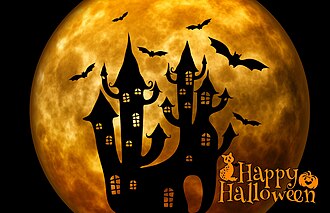
Halloween feels completely modern.
Plastic skeletons hang from porches. Children dress like superheroes and monsters. Stores fill entire aisles with candy. Families carve pumpkins, watch horror movies and send kids into the neighborhood demanding treats from strangers.
But underneath all of that is a holiday built from traditions that developed over centuries.
There was no single moment when someone invented Halloween. Ancient seasonal customs, Christian observances, folklore, immigration, neighborhood pranks and eventually commercial candy culture all became mixed together.
The result is one of the strangest holidays on the calendar.
What Happened
One of Halloween’s oldest influences is Samhain, a seasonal festival associated with Ireland and other Celtic regions. Samhain marked the end of summer and the beginning of the darker part of the year, around the beginning of November.
Traditions surrounding this time of year included stories about spirits and supernatural beings crossing more easily into the human world. Food, fires, disguises and other customs became associated with the season.
Christian traditions eventually became part of the same calendar period. November 1 became associated with All Saints’ Day, also called All Hallows, while the evening before became All Hallows’ Eve.
Over time, the name was shortened.
All Hallows’ Eve became Halloween.
That does not mean modern Halloween is simply an unchanged ancient Celtic holiday. It developed through centuries of overlapping religious traditions, folklore and local customs.
From Guising to Trick-or-Treating
Long before American children started knocking on doors for miniature candy bars, people in parts of Britain and Ireland practiced traditions involving costumes and door-to-door visits.
In Scotland and Ireland, “guising” involved people dressing in disguise and visiting homes. Children might sing, recite poetry or perform another small act in exchange for food or treats.
Other traditions involved “souling,” in which people went from house to house asking for food in exchange for prayers for the dead.
The modern phrase “trick or treat” did not become common until the twentieth century.
By the 1920s and 1930s, versions of the practice were appearing in North America. After World War II, suburban neighborhoods and the end of wartime sugar rationing helped trick-or-treating become a widespread American tradition.
The old exchange had changed.
Perform a song for food became give me candy or I might prank your house.
When Halloween Really Meant Tricks
Modern Halloween is heavily focused on the treats.
Earlier American celebrations could be considerably more destructive.
During the nineteenth and early twentieth centuries, Halloween became associated with pranks. Young people overturned wagons, removed gates, blocked roads, damaged property and played increasingly elaborate tricks.
As American towns became larger and more urban, those pranks became harder to dismiss as harmless fun.
Communities began organizing parties, parades and children’s activities as alternatives.
Trick-or-treating offered another solution.
Give the kids something at the door and maybe they will leave your property alone.
In that sense, the “treat” part of Halloween helped control the “trick.”
Why Pumpkins Replaced Turnips
The jack-o’-lantern also changed after crossing the Atlantic.
In Ireland and parts of Britain, people carved faces into turnips and other root vegetables. The lanterns became connected with folklore involving spirits and the legendary figure often called Stingy Jack.
Then immigrants brought the tradition to North America.
Here they found pumpkins.
Pumpkins were larger, easier to hollow out and far better suited to carving a face into than a turnip.
The pumpkin eventually became one of the defining symbols of Halloween.
One of the most recognizable American holiday traditions therefore began with people carving faces into root vegetables on the other side of the Atlantic.
Halloween Becomes American
Irish and Scottish immigration helped spread Halloween traditions in the United States during the nineteenth century.
Once here, the holiday continued changing.
Old folklore mixed with American neighborhood culture. Costumes became increasingly elaborate. Parties became common. Businesses began manufacturing decorations and costumes. Candy companies found an obvious market in millions of children walking door to door expecting something sweet.
By the twentieth century, Halloween had become increasingly secular and commercial.
Ghosts, witches and monsters remained, but participation no longer required believing any of them were real.
You could celebrate the supernatural without actually believing in the supernatural.
That may be one reason Halloween became so successful.
Why It Matters
Halloween is a good example of how traditions actually evolve.
There is rarely a clean starting point.
Samhain contributed traditions and beliefs. Christian observances contributed the calendar and the name. Irish and Scottish customs contributed disguises, lanterns and door-to-door traditions. American communities transformed pranking into organized trick-or-treating. Businesses turned the whole thing into a major commercial holiday.
Every generation changed it slightly. Yet some surprisingly old ideas survived. We still disguise ourselves. We still light carved faces in the darkness. We still tell stories about ghosts and things that appear after sunset.
And once every year, it is completely normal for masked strangers to knock on your door and demand food.
T Funk Take
Halloween is my favorite holiday. You get to take a break from everyday life and dress like a pickle, a ghoul, or whatever else makes sense for one night. I enjoy the idea of walking into a bank and conducting perfectly normal business with a zombie behind the counter. It’s all in good fun.
When I was a teenager, Halloween was a lot more about the tricks than the treats. It seemed like everyone became a criminal for one night.
Eggs were serious business.
We were planning for them weeks before the 31st. There were egg supply chains, secret conversations and preparations for the coming war with your rivals. Around Halloween, selling eggs to teenagers probably should have required a background check.
Nothing was better than hiding in the bushes, waiting for your classmates to come by, and launching an ambush with a carton of eggs.
Then, after the battle was over, you could stop by the neighbors for some treats dressed like Nicaraguan guerrillas.
Halloween gave everyone permission to be a little strange, a little stupid and completely different from who they were the other 364 days of the year.
Fond memories of glorious All Hallows’ Eve.
Case closed in the T Funk Era archive.
Sources & Further Reading
-
Halloween & Día de Muertos Resources
Library of Congress
View Source -
The Celtic Origins of Trick-or-Treating
Smithsonian Magazine
View Source -
When Halloween Was All Tricks and No Treats
Smithsonian Magazine
View Source