
Official Archive Record
Case File CF-0086
Robotic Labor: Who Gets Paid When Machines Do the Work?
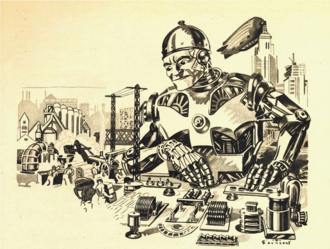
Imagine arriving at work to train your replacement.
It can lift the parts, follow the production schedule, and repeat the same movement for hours. It does not collect a paycheck. Its owner sends an invoice.
That future is already taking shape in specific workplaces. The unanswered question is how far it will spread—and what happens to the people whose labor becomes less necessary.
What Is Already Happening?
Robotic labor did not begin with machines shaped like people.
Industrial robots have spent decades performing tasks such as welding, assembly, and moving materials. According to the International Federation of Robotics, approximately 542,000 industrial robots were installed worldwide in 2024. The total operating stock reached about 4.66 million.
Those figures describe industrial machines, not millions of humanlike workers capable of doing any job. But they establish that physical automation already operates at a substantial scale. International Federation of Robotics
Humanoid robots represent another approach: machines designed to move and manipulate objects in spaces built around human bodies.
In November 2025, robotics company Figure reported that its Figure 02 deployment at BMW’s Spartanburg plant had loaded more than 90,000 parts and contributed to production of more than 30,000 vehicles.
The assigned work involved placing sheet-metal parts into welding fixtures. These were specific production tasks, not robots independently building entire cars.
The results were reported by the manufacturer. Its account also described hardware failures and design changes, offering a reminder that a working robot still needs maintenance, engineering support, and a suitable environment. Figure’s deployment report
When Does a Robot Become Cheaper Than a Worker?
A robot does not need a salary, but its labor is not free.
The meaningful comparison includes purchase or leasing costs, installation, electricity, repairs, software, supervision, downtime, and how much useful work the machine actually completes.
A machine that performs one movement reliably may be valuable on a production line. A machine that frequently needs rescuing may cost more than its promotional video suggests.
Replacing a task is also different from replacing an entire job.
A worker may move materials, notice damaged equipment, handle unusual requests, and solve problems nobody anticipated. Automating the lifting does not automatically automate everything else.
The practical question is how much of that work a robot can perform safely and economically over an ordinary working week.
What Could Happen Next?
Several futures are possible, and they could exist at the same time.
Robots could take over dangerous or physically exhausting tasks while people move into supervision, maintenance, or other work. Higher productivity could support shorter hours or lower prices.
Employers could also reduce hiring or eliminate positions. New jobs might appear in different places, require different qualifications, or pay less than the jobs they replace.
Past experience gives reasons to take displacement seriously. Research by economists Daron Acemoglu and Pascual Restrepo, examining U.S. labor markets from 1990 to 2007, found that industrial robot adoption reduced employment and wages in more exposed areas.
That study concerns a particular period and technology. It does not provide a reliable countdown to universal unemployment or a fixed replacement rate for future humanoid robots. MIT News
A future with less human labor is possible in some activities. A future where everyone benefits from that change requires additional decisions.
Why It Matters
A machine can increase production without deciding how the benefits are shared.
Savings might become lower prices, higher profits, better wages, shorter hours, or some combination. Ownership, competition, bargaining power, and public policy will influence the outcome.
That makes robotic labor a question about income as much as engineering.
If a business needs fewer workers, what happens to the people who depended on those wages? If new jobs appear, can displaced workers realistically reach them? If machines produce more goods, how do people obtain the money to buy them?
Proposals such as retraining, shorter workweeks, employee ownership, and income support address different parts of that problem. None should be presented as an automatic consequence of better robots.
The technology may change what is possible. People will still make decisions about who benefits.
T Funk Take
The part that interests me is what happens after the machine can do the job.
I understand why a business would want it. If a robot can do difficult work reliably and reduce costs, someone is going to put it to work.
And if it keeps a person from getting hurt or wearing out their body, that sounds like progress.
But the worker still needs an income.
Being told that technology will create new jobs does not explain where those jobs are, what they pay, or whether the person being replaced can do them.
If machines eventually handle more of the work, I would hope we get some of that time back. Shorter hours. More room to live. Some benefit that reaches the people who used to do the lifting.
Otherwise, we may get better at making things while making it harder for people to afford them.
The robot does not need a paycheck. The person it replaces still does.
Robotic labor stays open in the archive.
Sources & Further Reading
-
Global Robot Demand in Factories Doubles Over 10 Years
International Federation of Robotics
View Source -
F.02 Contributed to the Production of 30,000 Cars at BMW
Figure
View Source -
How many jobs do robots really replace?
MIT News
View Source