Official Archive Record
Case File CF-0065
The Loch Ness Monster: Scotland’s Deep-Water Mystery
Also known as: Nessie, Loch Ness Monster, Monster of Loch Ness, Loch Ness Creature, Scottish Lake Monster
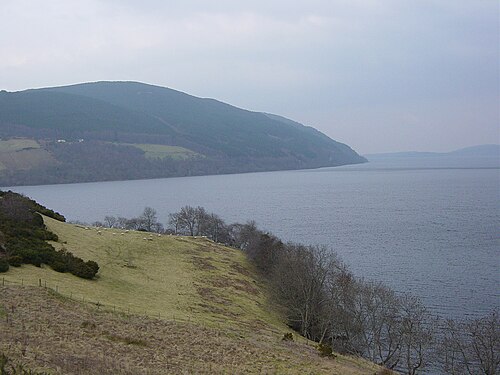
The Loch Ness Monster is the kind of case that almost does not need an introduction. A dark Scottish loch. A shape in the water. A ripple where something large may have moved. A witness who knows what they saw, even if nobody else can prove it.
What Happened
Loch Ness is a long, deep freshwater loch in the Scottish Highlands. Stories of a strange creature in or near the water go back far beyond the modern tourist age, but the legend exploded in the 1930s after a series of reported sightings and newspaper coverage.
The classic image of Nessie is a long neck rising from the water, almost like a surviving prehistoric marine reptile. That image became even more famous after the 1934 “Surgeon’s Photograph,” one of the most iconic monster photos ever published.
The problem is that the Surgeon’s Photograph was later exposed as a hoax. That did not kill the legend, but it did damage one of its most famous pieces of evidence.
Over the years, people have searched Loch Ness with boats, cameras, sonar, underwater photography, and environmental DNA testing. The results have not produced a confirmed monster. Some sightings may be waves, logs, birds, seals, large fish, boat wakes, optical illusions, or misidentifications.
But Loch Ness keeps its atmosphere.
The loch is deep, cold, dark, and difficult to read from the surface. Something ordinary can look strange there. A wake can become a back. A bird can become a neck. A shadow can become a survivor from another age.
Why It Matters
The Loch Ness Monster matters because Nessie became the global symbol of the lake monster. Bigfoot belongs to the woods. The Yeti belongs to the mountains. Nessie belongs to black water.
The case also shows how a legend can survive failed evidence. The most famous photo was a hoax. Major searches have not found a hidden breeding population of giant animals. Science does not support the idea that a prehistoric marine reptile has survived in a landlocked Scottish loch.
And yet people still look.
That may be the real power of Nessie. The creature lives in the gap between evidence and hope. Loch Ness feels like a place that should be hiding something. Even when the evidence points toward misidentification and folklore, the water itself keeps arguing back.
T Funk Take
The Loch Ness Monster… we all know this one, Chat. I do not need to describe it. Personally, it sounds like there is no strong reason why a creature like that would exist in that area.
But seals? That is more interesting.
Maybe seals found their way into the loch before recorded history. Maybe some older waterway or post-Ice Age connection allowed animals to move through places that no longer connect the same way today. We discover species that are exclusive to one small ecosystem regularly. How many came and went before we started paying attention?
That does not prove Nessie exists. It just makes the legend feel a little less ridiculous. A surviving prehistoric lake monster is a hard sell. A real animal, seen at the wrong distance, in the wrong light, on the wrong water, is much easier to believe.
Until Loch Ness gives up more than a ripple, Nessie stays open in the archive.
Sources & Further Reading
-
Loch Ness Monster Legend
National Geographic History
View Source -
Photograph of the Loch Ness Monster
Science Museum Group Collection
View Source -
Scientists Sift for DNA … of the Loch Ness Monster
National Geographic Education Blog
View Source