Official Archive Record
Case File CF-0006
Project Blue Book
Also known as: USAF Project Blue Book, Air Force Project Blue Book, Project Bluebook
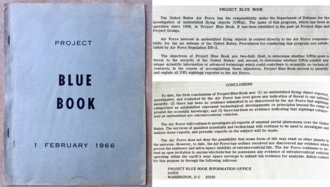
Project Blue Book was one of the most famous official UFO investigations in American history. Run by the United States Air Force, the program collected and studied reports of unidentified flying objects during the height of Cold War tension, when strange lights in the sky could mean anything from weather balloons to enemy aircraft to something nobody wanted to explain.
What Happened
Project Blue Book began in 1952 and continued until 1969. During that time, the Air Force reviewed thousands of UFO reports from pilots, military personnel, police officers, civilians, and other witnesses. Investigators looked for possible explanations such as aircraft, balloons, stars, planets, weather events, experimental technology, or simple misidentification.
Many cases were explained. Some were written off as mistakes, hoaxes, or natural phenomena. But not every report fit neatly into a box. A number of cases remained officially unidentified, which helped keep public interest alive long after the project ended.
Why It Matters
Project Blue Book matters because it proved one thing clearly: the government was paying attention. Whether someone believes UFOs are alien craft, secret military projects, or mostly human error, the existence of the program shows that the subject was considered serious enough to investigate.
The project also created a lasting debate. Skeptics point to the Air Force’s conclusion that UFOs did not represent a national security threat and showed no evidence of extraterrestrial technology. Believers point to the unresolved cases and argue that the official explanations were incomplete, rushed, or designed to calm the public.
T Funk Take
Nothing to see here? Information that made them think it was a important enough subject to track and pay attention to. However, not everything is the files have a plausible explanation.
Officially, the project ended. Unofficially, the argument never did.
Sources & Further Reading
-
Project BLUE BOOK - Unidentified Flying Objects
National Archives and Records Administration
View Source -
Unidentified Flying Objects and Air Force Project Blue Book
United States Air Force
View Source -
UFO Questions
Air Force Historical Support Division
View Source