Official Archive Record
Case File CF-0108
John Brown at Harpers Ferry: When Robert E. Lee and the Marines Put Down the Insurrection
Also known as: John Brown's Raid, John Brown's Harpers Ferry Raid, Harpers Ferry Insurrection
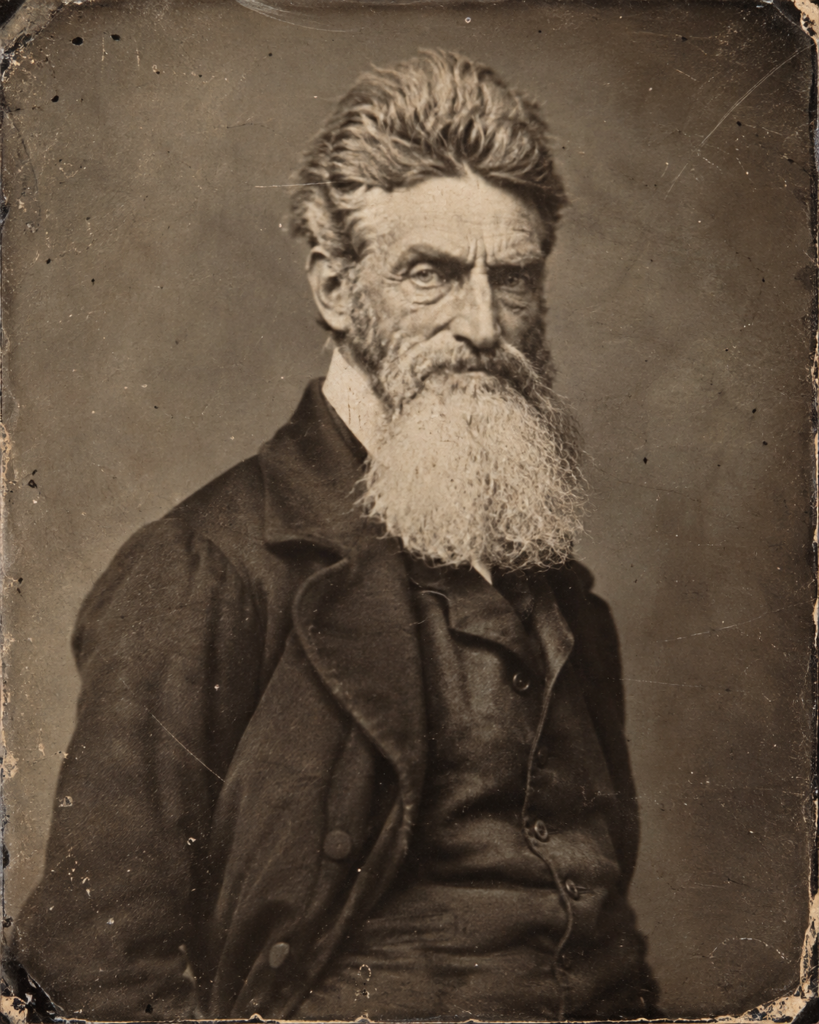
Two years before the American Civil War began, Robert E. Lee was still wearing a United States Army uniform.
He was not yet the commander of the Confederate Army of Northern Virginia. J.E.B. Stuart was not yet a famous Confederate cavalry general. And a detachment of United States Marines was about to be sent into Virginia to suppress an armed raid led by abolitionist John Brown.
The target was the federal arsenal at Harpers Ferry.
Brown intended to seize weapons, free enslaved people and begin an armed campaign against slavery.
Instead, his raid lasted about 36 hours.
It ended when Lee ordered the Marines in.
John Brown’s Plan
John Brown had spent years moving from political opposition to slavery toward armed resistance.
In 1856, during the violence known as Bleeding Kansas, Brown and several followers killed five pro-slavery settlers near Pottawatomie Creek. By the late 1850s, he was planning something far larger.
His target was Harpers Ferry, Virginia, now part of West Virginia.
The town contained a United States armory, arsenal and rifle works. Brown believed that if he captured the federal weapons stored there, enslaved people from the surrounding region would join him. Those recruits could then be armed and form the beginning of a larger guerrilla campaign against slavery.
Brown even had hundreds of pikes manufactured for people he expected to join the uprising.
He also drafted a provisional constitution for the revolutionary movement he hoped to create.
This was not intended to be a simple robbery.
Brown was trying to start a war against slavery.
The Raid Begins
On the night of October 16, 1859, Brown and 18 members of his group moved into Harpers Ferry while several additional supporters remained behind guarding supplies.
They quickly seized bridges, the federal armory and arsenal and the U.S. Rifle Works. Brown’s men also took local slaveholders hostage and freed several enslaved people.
At first, the operation appeared successful.
Then everything began to fall apart.
A Baltimore & Ohio passenger train arrived during the occupation. Heyward Shepherd, a free Black railroad employee, approached to investigate the delay and was shot by one of Brown’s men. He later died.
The train was eventually allowed to continue.
That turned out to be a serious mistake for Brown.
When the train reached Washington, word of the seizure of the federal arsenal traveled with it.
Harpers Ferry Fights Back
By daylight on October 17, townspeople were exchanging gunfire with Brown’s raiders.
Local militia units began arriving and blocked escape routes. Several of Brown’s men were killed or captured during fighting around the town, bridges and rifle works.
The mayor of Harpers Ferry, Fontaine Beckham, was shot and killed.
As the situation deteriorated, Brown and several remaining followers retreated into the armory’s fire engine house with hostages.
The small brick building would later become known as John Brown’s Fort.
Brown’s attempt to launch a widespread revolt had stalled almost immediately.
The large numbers of enslaved people he expected to join him never arrived.
Now he was surrounded.
Washington Sends Robert E. Lee
The federal government needed regular troops.
President James Buchanan’s administration turned to Marines stationed in Washington.
Approximately 90 U.S. Marines were sent by train toward Harpers Ferry. The operation was placed under the overall command of U.S. Army Brevet Colonel Robert E. Lee.
That name would mean something completely different less than two years later.
In October 1859, Lee was still a career officer of the United States Army.
The Marines arrived at Harpers Ferry late on October 17. Lee surveyed the situation and decided against immediately attacking the engine house because Brown was holding hostages inside.
Local militia would maintain the perimeter.
The Marines would make the assault.
J.E.B. Stuart Delivers the Ultimatum
Lee had another young Army officer with him.
First Lieutenant J.E.B. Stuart served as his aide.
At approximately 7 a.m. on October 18, Stuart approached the engine house carrying Lee’s demand for surrender.
Brown refused.
That refusal was the signal.
Stuart stepped away and signaled the Marines to attack.
Years later, Lee and Stuart would become two of the Confederacy’s most famous commanders.
On this morning, both were acting on behalf of the United States government.
The Marines Go In
The Marine detachment was led by Lieutenant Israel Greene.
Lee wanted the hostages recovered alive, so the Marines faced a dangerous restriction. They could not simply pour gunfire into the building.
Marine Corps historical accounts say the assault force went in without loaded weapons to reduce the chance of accidentally shooting the hostages.
The first attempt to smash through the heavy engine-house doors using sledgehammers failed.
The Marines then grabbed a ladder and used it as a battering ram.
The doors broke.
Greene and his Marines rushed inside.
The Fight Inside John Brown’s Fort
The assault itself lasted only minutes.
Brown’s men fired at the Marines as they entered. Marine Private Luke Quinn was killed, and another Marine was wounded.
The Marines responded primarily with bayonets.
Lieutenant Greene reached Brown and struck him with his sword, knocking him to the floor. Brown survived the blow and was taken prisoner.
Two of Brown’s remaining raiders were killed inside the engine house. Others were captured.
The hostages survived.
After roughly 36 hours, John Brown’s raid on Harpers Ferry was over.
Was It a Rebellion?
That depends on what part of the event we are describing.
Brown’s immediate force was small. The massive slave uprising he hoped to trigger never happened.
But his objective went far beyond occupying one building.
Brown intended to arm enslaved people, establish a continuing guerrilla movement and destabilize slavery throughout the South. He had even drafted a provisional constitution for the political structure he hoped would accompany that resistance.
Virginia authorities treated the action accordingly.
Brown was prosecuted for murder, treason against Virginia and conspiring with enslaved people to rebel.
He was convicted on all counts.
So it is reasonable to describe Harpers Ferry as an attempted insurrection.
It simply failed before becoming the much larger rebellion Brown envisioned.
Brown Goes on Trial
Brown was badly wounded during his capture.
He was taken to nearby Charles Town, Virginia, where his trial began only days later.
The courtroom proceedings transformed Brown from a defeated raider into a national political figure.
Brown did not apologize for opposing slavery.
At sentencing, he argued that he had acted on behalf of people whose rights were being denied and said he was prepared to give his life for that cause.
He was sentenced to death.
John Brown was hanged on December 2, 1859.
A Country Splits Over John Brown
Brown’s death did not end the argument.
It made it bigger.
Many white Southerners saw the raid as confirmation of their worst fear: armed abolitionists encouraging enslaved people to revolt.
Many abolitionists in the North increasingly viewed Brown as a martyr willing to die for emancipation, even when they disagreed with his methods.
Other Northerners condemned the violence and wanted nothing to do with him.
Frederick Douglass had actually warned Brown beforehand that attacking the federal arsenal was suicidal and declined to participate.
After Brown’s death, however, even Douglass acknowledged the enormous impact of the raid.
Harpers Ferry became another crack in a Union that was already breaking apart.
The Historical Irony
The people involved make the story even stranger.
Robert E. Lee commanded the federal operation.
J.E.B. Stuart delivered the surrender demand.
United States Marines stormed the building.
Less than two years later, Lee would resign his U.S. Army commission and become the Confederacy’s most famous general. Stuart would become one of his best-known cavalry commanders.
The Marines, meanwhile, remained a federal military force and fought for the Union during the Civil War.
At Harpers Ferry in 1859, none of those later identities had fully formed yet.
They were all still standing on the same side.
Against John Brown.
Why It Matters
John Brown failed tactically.
He did not capture enough weapons to sustain a rebellion. The uprising he expected did not materialize, most of his raiders were killed or captured and he was executed within weeks.
Politically, the results were much harder to contain.
The raid intensified Southern fears that slavery could be attacked through organized violence. Brown’s execution simultaneously turned him into a martyr for many abolitionists.
The country became even more polarized over slavery.
Sixteen months after Brown’s execution, Confederate artillery opened fire on Fort Sumter.
The much larger war Brown believed was coming had begun.
T Funk Take
The part of this story that gets me is the cast.
You have John Brown taking over a federal arsenal because he believes he can start an armed revolt against slavery. The United States government responds by sending Marines, and the Army officer put in charge of them is Robert E. Lee.
Then Lee sends J.E.B. Stuart to the door to tell Brown to surrender.
That sounds like somebody mixed up the characters while writing the Civil War.
At this point Lee and Stuart aren’t Confederate officers. They are United States Army officers trying to recover a United States arsenal. The Marines are the assault force, and when Brown refuses to surrender, they smash through the doors with a ladder and go in with bayonets because there are hostages inside.
That’s an incredible piece of American history.
John Brown is also difficult to put into a simple box. His cause was ending slavery, which was unquestionably an evil institution. His method was armed violence, seizure of federal property and an attempt to trigger a much larger uprising.
You can understand why some people saw him as a freedom fighter and others saw him as an insurrectionist.
Both parts of the story are sitting right there.
What I find most interesting is knowing what happens next.
Lee puts down an insurrection against the United States in 1859.
Less than two years later, he leaves the United States Army and eventually commands an army fighting against that same government.
History does strange things with people.
And sometimes the strangest part is realizing that everyone involved had no idea yet which chapter of the history book they were about to end up in.
Case closed in the T Funk Era archive.
Sources & Further Reading
-
John Brown's Raid
National Park Service — Harpers Ferry National Historical Park
View Source -
A Look Back at John Brown
National Archives and Records Administration
View Source -
United States Marines at Harper's Ferry and in the Civil War
U.S. Marine Corps History and Museums Division / Marine Corps University
View Source