
Official Archive Record
Case File CF-0098
The Coffeehouse Ban of 1675: When England Tried to Shut Down Coffee
Also known as: Proclamation for the Suppression of Coffee-Houses, 1675 Coffeehouse Ban
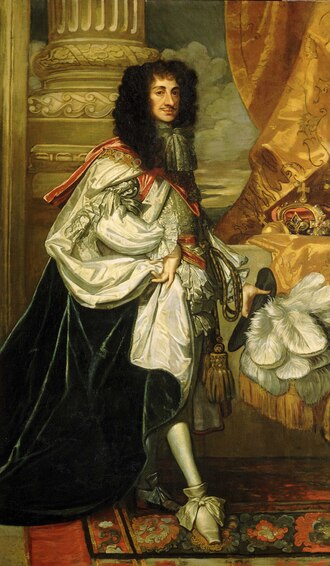
Coffee is so ordinary today that it is hard to imagine a government considering it a threat. But in 1675, King Charles II issued a royal proclamation aimed at shutting down coffeehouses across England, Wales and Berwick-upon-Tweed.
The problem was not really the drink. It was what people were saying while they drank it.
What Happened
Coffeehouses had spread rapidly through England during the 1600s. They were places where people could drink coffee, read newspapers, exchange business information, hear the latest gossip and argue about politics.
That made them more than early versions of modern cafés. They became information networks.
On December 29, 1675, Charles II issued a proclamation ordering public coffeehouses to stop operating after January 10, 1676. The order also targeted the retail sale of coffee, chocolate, tea and sherbet when they were intended to be consumed inside those establishments.
The proclamation complained that coffeehouses attracted “idle and disaffected persons” and allowed false, malicious and scandalous reports about the government to spread.
In other words, people were gathering in public, sharing information and criticizing those in power. The king wanted it stopped.
Why Coffeehouses Mattered
A seventeenth-century coffeehouse was part café, part newspaper stand, part business office and part public discussion forum.
Customers could read printed news, hear information from travelers and merchants, discuss politics and conduct business. Some establishments became associated with particular professions or commercial interests.
That ability to exchange information worried authorities.
The British Museum notes that political discussion inside coffeehouses alarmed the government. The same information-sharing culture also contributed to developments in financial journalism, the stock market and businesses such as Lloyd’s.
A cup of coffee had become attached to something much larger: access to information.
The Ban That Barely Happened
There was one major problem with the king’s plan. Coffeehouses were already popular and economically important.
Just days after the original proclamation, coffee sellers petitioned the government. They argued that they already possessed large stocks of coffee and tea on which duties had been paid and that additional shipments were already on their way to England.
On January 8, 1676 — only two days before the shutdown was supposed to begin — Charles issued another proclamation.
Existing coffee sellers were allowed to continue operating for another six months. The new arrangement also placed conditions on coffeehouses, including pressure to prevent the circulation of seditious or scandalous material.
So the famous “coffee ban” was not a simple case of coffee being outlawed and then immediately legalized again.
The government tried to shut the establishments down, encountered resistance and economic complications, and backed away from the original plan before the full closure took effect.
An Early Information Problem
The most interesting part of the story may be how familiar the government’s complaint sounds.
The authorities were concerned about people spending too much time gathering together, consuming news, repeating rumors and spreading information that might damage confidence in the government.
The technology was different. The basic problem was not.
Coffeehouses allowed information to move quickly between people without the government controlling every conversation.
In the seventeenth century, the network did not require phones, computers or social media. It required a table, newspapers, conversation and a cup of coffee.
Why It Matters
The Coffeehouse Ban of 1675 is strange history, but it is also an early example of governments struggling with rapidly changing information networks.
Coffeehouses helped connect merchants, writers, scientists, political thinkers and ordinary customers. They provided spaces where ideas could move outside traditional institutions.
Charles II’s proclamation shows that authorities understood the political power of those networks.
The king was supposedly regulating coffeehouses. What he was really trying to regulate was conversation.
T Funk Take
Imagine the government deciding Starbucks is dangerous because people are sitting around talking about politics. Absurd.
But this was a time when a king held enormous power, and openly challenging that power could have serious consequences.
Conversation was seen as a threat because, in a way, it was. People naturally gather and talk about problems with their leaders. They test each other’s opinions, find out who agrees with them, and eventually congregate with like-minded people.
The government understood that.
The problem was that banning coffeehouses also meant disrupting businesses, taxes, trade and a commodity people had already embraced. Political control ran into economic reality.
And we know how that turned out.
Coffee won.
Or maybe conversation won.
Either way, I’ll drink to that.
Case closed in the T Funk Era archive.
Sources & Further Reading
-
By the King. A Proclamation for the Suppression of Coffee-Houses
Folger Shakespeare Library
View Source -
An Additional Proclamation Concerning Coffee-Houses
The London Gazette
View Source -
Interior of a London Coffee-house
The British Museum
View Source