Official Archive Record
Case File CF-0017
The Dancing Plague of 1518
Also known as: Strasbourg dancing plague, Dance Epidemic of 1518, Strasbourg dance epidemic, Dancing mania of 1518
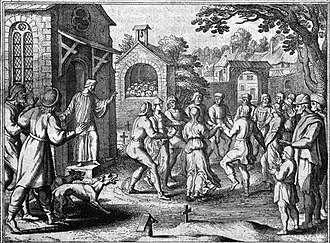
In the summer of 1518, the city of Strasbourg became the center of one of the strangest events in European history. People began dancing in the streets, not for celebration, not for a festival, and not because anyone had asked them to. They danced because they seemed unable to stop.
What Happened
The outbreak reportedly began when a woman known as Frau Troffea started dancing in the street. She continued for hours, then days. Soon, others joined her. Before long, dozens of people were caught in the same strange behavior, dancing in public as if trapped by an invisible force.
Local authorities did not know what to do. Instead of stopping the dancing, some accounts say they encouraged it, believing the afflicted people needed to dance the sickness out of their bodies. Musicians were brought in. A space may have been cleared. The plan was basically: if they cannot stop dancing, let them dance until it passes.
That did not work.
The dancers reportedly continued until some collapsed from exhaustion, dehydration, or injury. The exact number of people affected and whether anyone died is debated, but the core story remains one of history’s most bizarre mass events.
Why It Matters
The Dancing Plague matters because it sits right between history, medicine, psychology, religion, and fear. Modern explanations often point to mass psychogenic illness, extreme stress, religious belief, famine, disease, or social panic. In a time of hardship, people may have expressed fear and suffering through behavior that spread through the community.
Other theories have suggested poisoning, illness, or contaminated food, but those explanations do not fully satisfy everyone. What makes the case so memorable is not just that people danced. It is that the dancing became a crisis.
The event shows how fear can move through a population almost like a disease. When a community is under enough pressure, the human brain and body can do strange things.
T Funk Take
The Dancing Plague of 1518 sounds funny for about three seconds, and then it becomes terrifying. Dancing until you are exhausted, hurt, and unable to stop is not a party. That is a horror movie with a lute soundtrack.
Maybe it was stress. Maybe it was mass panic. Maybe it was sickness, superstition, and bad leadership all stepping on each other’s feet.
But when the official solution is “bring in musicians and make the haunted dance marathon worse,” the file earns its place in the archive.
Case status: still weird, still debated, and absolutely not fixed by adding more accordion.
Sources & Further Reading
-
In a Spin: The Mysterious Dancing Epidemic of 1518
Endeavour / PubMed, U.S. National Library of Medicine
View Source -
A Time to Dance, A Time to Die: The Extraordinary Story of the Dancing Plague of 1518
German History / Oxford Academic
View Source -
What Was the Dancing Plague of 1518?
HISTORY
View Source